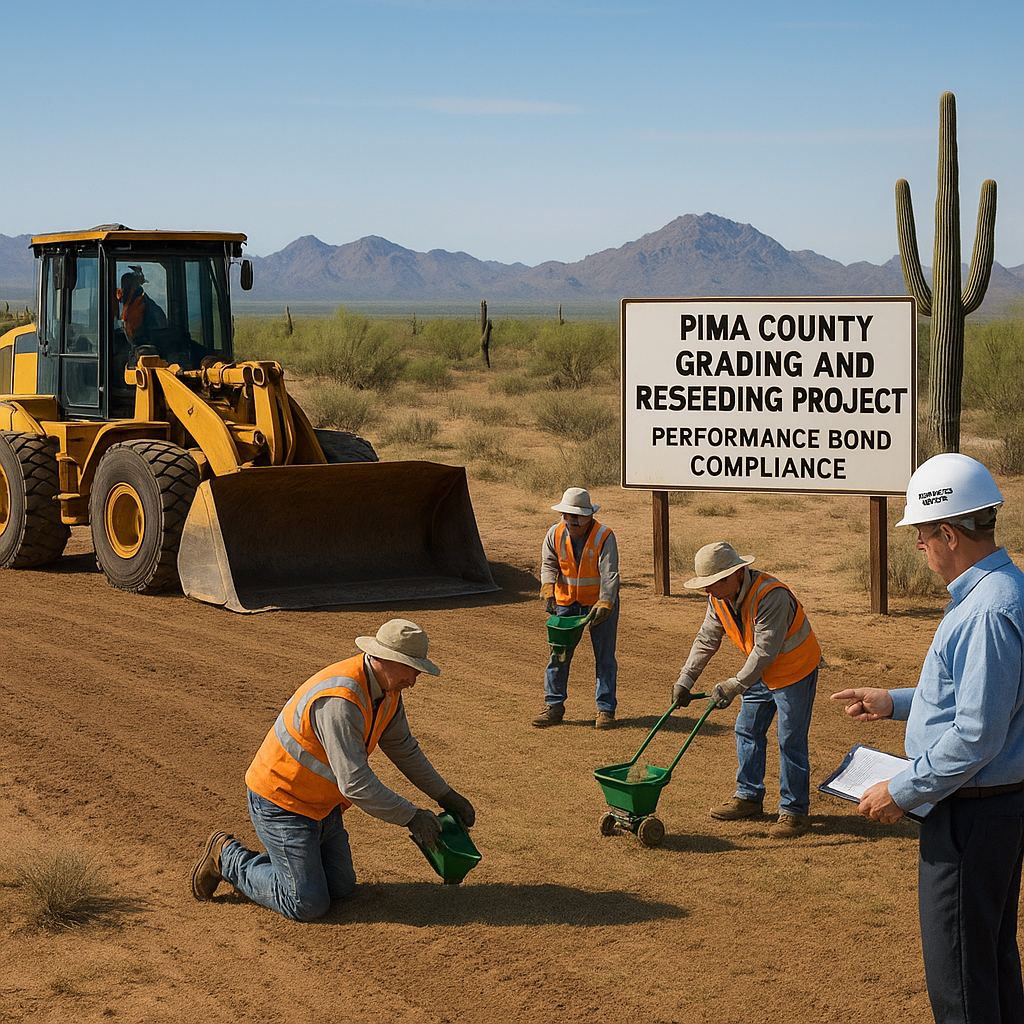
If you’ve ever watched heavy equipment move dirt across a sunny Arizona lot, you know there’s more to grading than just pushing soil around. Whether it’s a new home site, a commercial pad, or a roadway improvement, the ground beneath our feet has to be shaped carefully. In Pima County, Arizona, that work often comes with a specific set of rules and financial protections. One of the most important tools in that process is a performance bond, especially when we’re talking about preliminary grading and reseeding.
What Is a Performance Bond?
Let’s keep this simple. A performance bond is a promise. It’s a three-party agreement that guarantees a contractor will complete a job according to the approved plans and local rules. If the contractor doesn’t finish the work, or if the work doesn’t meet the required standards, the bond can provide money to fix the problem.
Think of it like a security deposit. When you rent an apartment, the landlord holds a deposit in case you leave damage behind. A performance bond works in a similar way. It gives the project owner—or in many cases, the county—a financial safety net if something goes wrong.
For grading projects in Pima County, this promise isn’t just about finishing a building. It’s about protecting the land itself, nearby properties, and the local environment.
Why Pima County Grading Projects Need Special Attention
Pima County, Arizona has a unique landscape. From the Sonoran Desert to the foothills around Tucson, the soil, drainage patterns, and weather all play a role in how land should be disturbed and restored. When heavy summer monsoon rains hit, bare soil can wash away quickly. Dust can become a nuisance for neighbors. If grading isn’t done properly, runoff can damage roads, clog drainage channels, or harm native plants.
Because of these challenges, Pima County often requires grading contractors and developers to secure a Pima County performance bond before certain work begins. One common requirement is a preliminary grading and reseeding bond. This bond is a specialized type of compliance tool that focuses on the early stages of land disturbance and the critical step of putting the land back in good shape.
Preliminary Grading and Reseeding: A Closer Look
Before a foundation can be poured or a road can be paved, the site must be graded. That means cutting down high spots, filling in low spots, and creating a stable surface. In Pima County, this stage is often called preliminary grading. It’s the first major disturbance of the natural ground.
But the work doesn’t stop there. Once the initial grading is done, the land often needs to be reseeded. Reseeding helps restore native grasses and ground cover. It stabilizes the soil, reduces erosion, and keeps dust down. This is especially important in Arizona, where the sun can bake exposed dirt and the wind can carry it for miles.
A preliminary grading and reseeding bond ensures that the contractor will follow through on both steps. It’s not just about moving dirt. It’s about leaving the site in a condition that meets county standards and protects the surrounding area.
Compliance-Only Performance Bonds: What Does That Mean?
You might come across the term compliance-only performance bond and wonder how it differs from a regular performance bond. The idea is fairly straightforward. A compliance-only bond focuses specifically on meeting the rules, codes, and permit conditions set by the local jurisdiction.
In Pima County, that means the bond is tied to the grading permit and its requirements. The bond doesn’t necessarily cover the entire construction project, like the framing or electrical work. Instead, it covers the land-disturbing activities and the required restoration work. If the contractor fails to comply with the approved grading plan, fails to install erosion controls, or walks away before reseeding is complete, the bond can be used to correct those issues.
It’s like having an agreement that says, “You can move the dirt, but you must also follow the rulebook and clean up after yourself.”
Who Needs a Pima County Grading Bond?
If you’re a grading contractor, a developer, a homebuilder, or even a private landowner planning significant earthwork in Pima County, you may need this type of bond. The exact requirements can vary based on the size of the project, the amount of disturbed area, and the potential impact on drainage or the environment.
For example, a small landscaping project might not need a bond. But a larger site-prep job that involves cutting and filling thousands of cubic yards of dirt almost certainly will. When you pull a grading permit through Pima County Development Services, they will tell you if a bond is required and what amount is needed.
How Does the Bond Protect Everyone?
It’s easy to think of a bond as just another paperwork requirement, but it actually does a lot of practical good. Let’s break down the benefits.
- It protects the county and the public. If a contractor leaves a site unstable or bare, the county can use the bond to hire another crew to finish the restoration. This keeps neighborhoods safer and prevents erosion problems from spreading.
- It protects property owners. If you’re hiring a contractor to grade your land, the bond gives you confidence that the work will be completed correctly. You won’t be left paying twice if the original contractor disappears.
- It protects responsible contractors. Being bonded shows clients and regulators that you take your work seriously. It builds trust and can help you win more jobs in the competitive Arizona construction market.
A Real-Life Example
Imagine a contractor is hired to prepare a five-acre parcel near Tucson for a small commercial development. The crew clears the native vegetation, cuts a building pad, and creates a temporary drainage swale. The permit requires that after rough grading, the disturbed slopes be reseeded with native plants and protected with erosion-control matting.
Halfway through the job, the contractor runs into financial trouble and abandons the project. Without a bond, the property owner might be stuck with a bare, eroding site and no easy way to recover the money needed to fix it. But because a compliance-only performance bond was in place, the owner and the county can call on the bond. The surety company steps in, hires another contractor, and gets the seeding and erosion control done correctly.
That’s the power of the bond. It turns a broken promise into a protected path forward.
How Much Does a Pima County Grading Bond Cost?
The cost of a bond depends on the total bond amount required by the county and the contractor’s financial profile. You won’t pay the full bond amount upfront. Instead, you pay a premium, which is a small percentage of the bond amount.
For example, if the county requires a $50,000 bond, your premium might be anywhere from 1% to 5% of that amount, depending on your credit and business history. That means you might pay between $500 and $2,500 for the bond. It’s a manageable cost for many contractors, especially compared to the risk of losing a project or facing fines.
How Long Does the Bond Stay in Place?
The bond typically remains in effect until the county releases the grading permit. That usually happens after the work is inspected and the reseeding has been accepted. In some cases, the county may require the bond to stay in place through a maintenance period to make sure the vegetation takes root and the site remains stable.
Tips for Contractors and Developers
Navigating bond requirements can feel confusing, but a few simple steps can make the process smoother.
- Talk to Pima County early. Before you start moving dirt, ask about the specific bonding requirements for your project. Each site is different.
- Work with a surety bond specialist. A knowledgeable agent can help you understand your options and find the best rate, even if your credit isn’t perfect.
- Document your work. Keep records of your grading progress, erosion-control measures, and reseeding efforts. Good documentation can speed up the bond release process.
- Plan for Arizona weather. Schedule grading and reseeding with the seasons in mind. Planting before the monsoon can help vegetation establish faster.
Common Questions About Grading Bonds in Pima County
Is a performance bond the same as insurance?
No, they are different. Insurance protects the contractor from accidents or losses. A performance bond protects the project owner and the county if the contractor doesn’t fulfill their obligations. If a claim is paid, the contractor is usually responsible for reimbursing the surety company.
What happens if a contractor doesn’t finish the reseeding?
If the contractor fails to complete the required reseeding, the county can make a claim against the bond. The surety company may hire another contractor to finish the work or compensate the county for the cost of doing so. This is why the bond is so important for compliance.
Can new contractors get a grading bond?
Yes. New contractors can often qualify for bonds, especially smaller ones. Surety companies look at credit, experience, and financial stability. Even if you’re new, working with a bond specialist can help you find a program that fits your situation.
Final Thoughts
Grading work in Pima County, Arizona comes with real responsibility. The ground you move today can affect the community for years to come. That’s why performance bonds, especially compliance-only bonds for preliminary grading and reseeding, are such an important part of the process. They keep projects accountable, protect the desert landscape, and give everyone involved a little more peace of mind.
Whether you’re a seasoned grading contractor or a developer planning your first project in the Tucson area, understanding these bonds can save you time, money, and stress. When the rules are clear and the promises are backed by a solid bond, everyone benefits—the contractor, the property owner, and the community.