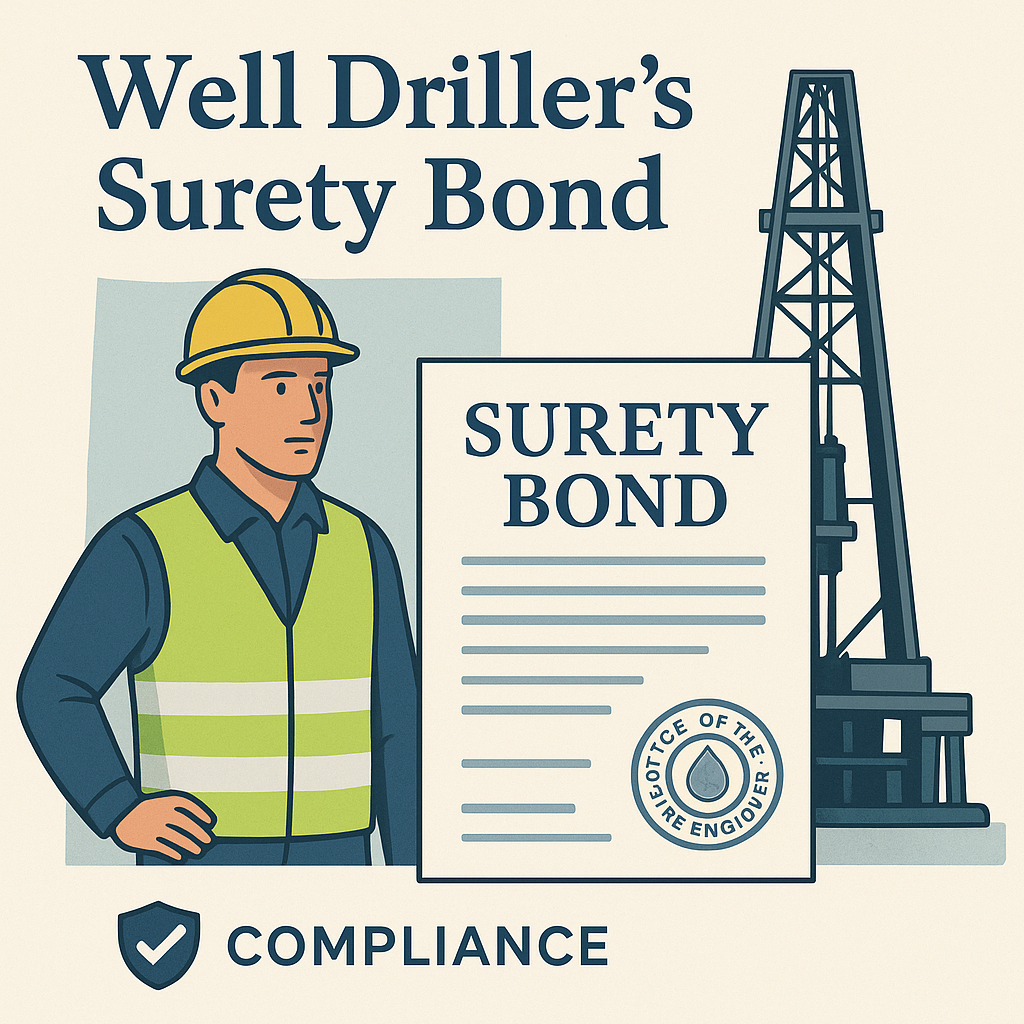
If you work in well drilling in Utah—or plan to hire a well contractor—you may have come across the term well driller’s surety bond. At first glance, it might look like just another licensing requirement. But it actually plays a big role in keeping Utah’s water wells safe, legal, and properly constructed.
The Office of the State Engineer Utah oversees well drilling in the state. As part of that oversight, many well contractors need to obtain and maintain a surety bond. This bond serves as a promise to follow state rules and protect the public if something goes wrong.
Let’s break down what a well driller’s surety bond is, why it matters, who needs one, and how you can get bonded without stress.
What Is a Well Driller’s Surety Bond?
A surety bond is a three-party agreement. It involves the well driller, the state, and a surety company. In plain language, it is a financial guarantee that the driller will obey Utah’s laws, regulations, and licensing rules.
Here are the three parties in the bond:
- Principal: The well driller or well contractor who needs the bond.
- Obligee: The Office of the State Engineer Utah, which requires the bond.
- Surety: The company that backs the bond financially if a valid claim is made.
Think of the bond like having a responsible co-signer. The surety company says, “We believe this contractor will follow the rules. If they don’t, we will cover a valid financial loss up to the bond amount.” But the contractor remains responsible for paying the surety back.
Why Does Utah Require This Bond?
Well drilling is serious work. A poorly constructed well can contaminate groundwater, damage property, or create safety hazards. Because water is such a vital resource, the state of Utah wants to make sure well contractors operate carefully and lawfully.
The well driller’s surety bond is not just a formality. It gives the state and the public a way to recover money if a contractor violates the rules. It also encourages contractors to do the job correctly the first time.
For example, imagine a drilling contractor abandons a job halfway through, leaving a property owner with an open, unsafe well. If the contractor broke state regulations, a claim can be filed against the bond. Without the bond, the property owner might have to pay for repairs out of pocket and chase the contractor through court.
Who Needs a Well Driller’s Surety Bond in Utah?
In Utah, licensed well drillers and well contractors often need a surety bond as part of their compliance requirements. The exact bond amount and form depend on the type of license or work being performed. The bond is commonly required before a license is issued or renewed.
Some Utah well contractor bonds are known as compliance-only bonds. This means the bond focuses on following state laws and regulations. It does not act as a warranty for the finished well or guarantee the quality of the workmanship. Instead, it protects against things like failing to meet state construction standards, not completing required reports, or operating without proper authorization.
If you’re not sure whether you need a bond, the best move is to check directly with the Office of the State Engineer Utah. They can tell you the exact bond amount and form required for your specific license type.
How Does the Bond Work in Real Life?
Here’s a simple way to understand the bond process.
Suppose a homeowner hires a licensed Utah well driller. The driller starts the project but fails to follow state well construction standards. The homeowner files a complaint with the state. If the state finds a violation, a claim can be made against the driller’s surety bond.
The surety company then investigates the claim. If the claim is valid, the surety may pay the harmed party up to the bond’s full amount. But remember—this is not free money for the contractor. The driller is legally required to repay the surety for any claim paid out. In this way, the bond acts like a line of credit, not insurance.
This repayment responsibility is one reason why contractors take the bond seriously. A claim can hurt their business finances and make it harder to get bonded in the future.
What Does a Well Driller’s Surety Bond Cost?
You don’t need to pay the full bond amount upfront. Instead, you pay a small percentage called the premium. For most contractors with good credit, the premium is typically between 1% and 5% of the bond amount.
For example, if the state requires a $10,000 bond, your premium might be somewhere around $100 to $500 per year. The exact cost depends on your credit score, business financial history, and the bond amount required.
The good news is that many surety companies offer quick quotes. Even if your credit isn’t perfect, you can often get bonded, though the premium may be higher.
How to Get a Utah Well Driller’s Surety Bond
Getting bonded is usually a straightforward process. Here are the basic steps:
- Confirm your bond amount: Contact the Office of the State Engineer Utah or check your licensing paperwork to find the exact bond amount and form required.
- Gather your information: You’ll typically need your business name, license information, and basic financial details.
- Request a quote: Reach out to a surety bond agency that handles Utah well driller bonds. You can often get a quote online or by phone.
- Pay the premium: Once you accept the quote, pay the premium to activate the bond.
- File the bond: Send the completed bond form to the Office of the State Engineer Utah as part of your licensing or renewal process.
Many contractors can get bonded the same day or within a couple of business days. The key is making sure you have the correct bond form and amount from the state.
Keeping Your Bond and Compliance in Good Standing
Once you have your Utah well driller’s surety bond, your job isn’t over. You need to keep the bond active for as long as your license requires it. Most bonds run on an annual renewal cycle. If you let the bond lapse, your license could be suspended or revoked.
Here are a few tips to stay in good standing:
- Mark your bond renewal date on your calendar.
- Pay your premium on time each year.
- Notify your surety company if your business information changes.
- Follow all state well drilling regulations and complete required paperwork.
- Address any complaints or disputes quickly before they become claims.
Maintaining a clean record not only helps you avoid claims, but it can also keep your future bond premiums lower.
Is a Surety Bond the Same as Insurance?
This is one of the most common questions contractors ask. The answer is no. A surety bond is not insurance for the contractor. Insurance protects the policyholder from unexpected losses. A bond protects the public and the state.
If a claim is paid on your bond, you must repay the surety company. With insurance, you generally don’t repay the insurance company after a covered claim. This difference makes bonds a powerful accountability tool.
Think of it this way: insurance is a safety net for your own business. A surety bond is a safety net for the people who rely on you to follow the rules.
Why This Bond Matters for Everyone
Utah’s groundwater is a shared resource. Whether you’re a drilling contractor, a homeowner, or a farmer, clean and safe water matters. The well driller’s surety bond helps protect that resource by holding contractors accountable.
For contractors, the bond demonstrates that you take your legal obligations seriously. It can also build trust with customers. When a homeowner sees that you are licensed and bonded, they feel more confident hiring you.
For property owners, the bond offers a layer of financial protection if something goes wrong. It is not a substitute for doing your homework before hiring a contractor, but it provides a clear path to seek compensation for valid claims.
Final Thoughts
The well driller’s surety bond in Utah may seem like a small piece of paper, but it carries big responsibility. It connects contractors, the state, and the public in a shared commitment to safe, lawful well drilling.
If you need a bond, start by contacting the Office of the State Engineer Utah to confirm your requirements. Then work with a reputable surety bond provider to get a quote and file your bond correctly. Whether you’re a seasoned driller or just starting out, staying bonded and compliant helps you build a stronger, more trustworthy business in Utah.