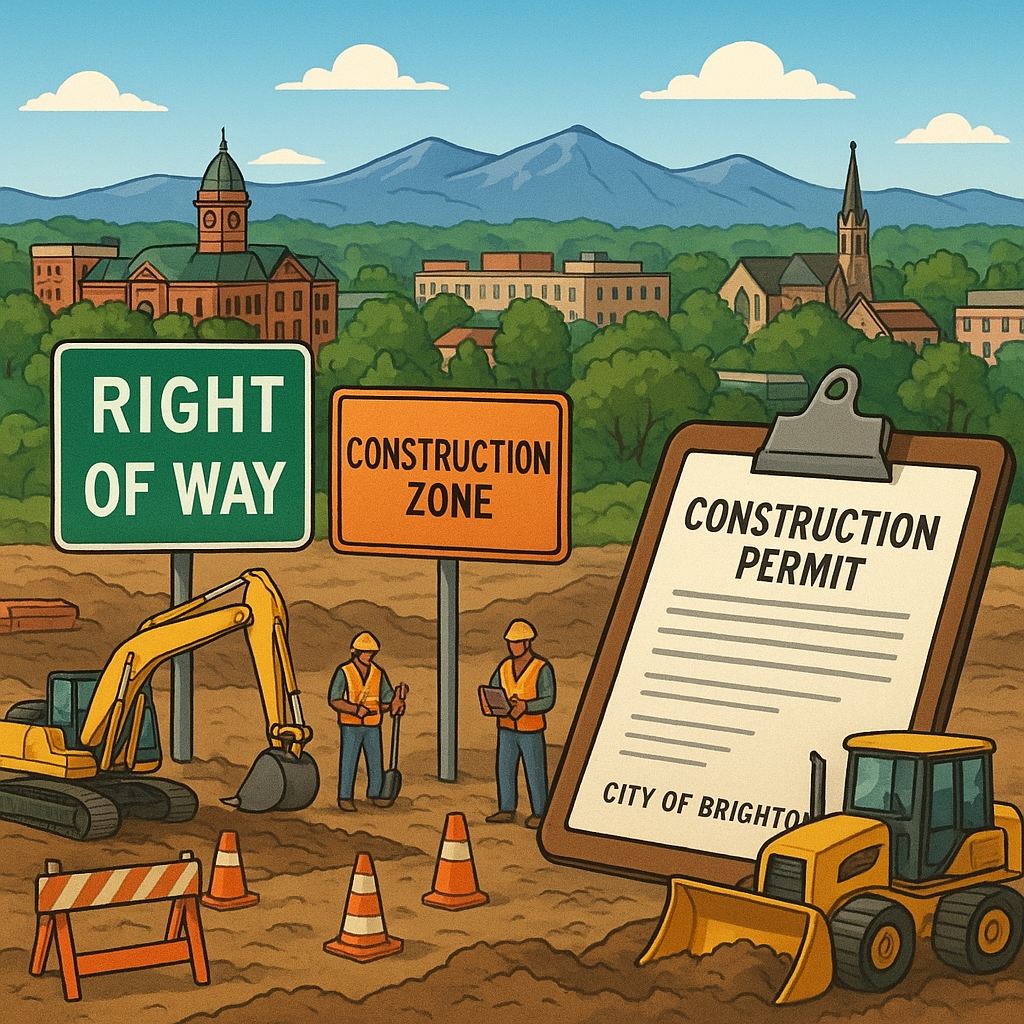
If you’re planning any kind of construction in Brighton, Colorado—especially work that touches a public sidewalk, street, or utility line—you may have come across the term right of way / new construction permit bond. It can sound like bureaucratic red tape, but in reality, it’s a fairly simple tool that protects both the city and you as the property owner or contractor.
Let’s unpack what this bond is, why Brighton requires it, how it works, and what you need to know to get one without the headache.
What Is a Right of Way Permit Bond?
A right of way permit bond is a type of surety bond that the City of Brighton may require before you begin work in a public right of way. The “right of way” generally refers to the land owned by the public, such as streets, sidewalks, curbs, parkways, and utility corridors. It’s the space between private property lines that everyone uses to move around and access utilities.
Think of it this way: if your project involves digging up a sidewalk, cutting into a street, or connecting a new sewer line, you’re working on land that belongs to the public. The city wants to make sure that the work is done correctly and that any damage is repaired.
A surety bond is a three-party agreement. It involves:
- The principal: The contractor, developer, or property owner who needs the permit.
- The obligee: The City of Brighton, which requires the bond.
- The surety: The company that backs the bond financially.
The bond promises that you will follow all permit rules, complete the work according to city standards, and repair any damage to public property. If you don’t, the surety can pay the city up to the bond amount to cover repairs or unfinished work.
Why Brighton Requires These Bonds
You might be wondering, “Why do I need to buy a bond just to do construction?” The answer comes down to protecting public resources and taxpayer dollars.
Public right of way areas are shared spaces. If a contractor tears up a street to install a water line and then fails to patch the asphalt properly, the city—and ultimately local taxpayers—would have to pay for the repair. A permit bond shifts that risk away from the public and onto the party doing the work.
For Brighton, the bond is a way to ensure that construction projects meet local codes and that public infrastructure remains safe and functional. It also gives property owners and contractors a clear financial incentive to complete their work responsibly.
Common Projects That May Need a Bond
Not every construction job requires a right of way bond. However, if your project falls into one of these categories, there’s a good chance you’ll need one in Brighton:
- Sidewalk repair or replacement
- Driveway approach installation or widening
- Street cuts for utility connections
- Sewer or water line repair and replacement
- Storm drain work
- Curb and gutter installation
- Landscaping or hardscaping in the public right of way
- New construction that impacts public sidewalks or streets
If you’re unsure whether your project needs a bond, the best move is to contact the City of Brighton’s permit office before you start. They can tell you exactly what’s required for your specific permit.
How Does a Right of Way / New Construction Permit Bond Work?
Let’s use a simple analogy. Imagine you’re renting a tool from a neighbor. To make sure you return it in good shape, they ask for a small cash deposit. If you bring the tool back damaged, they keep the deposit to cover the repair. If you return it in perfect condition, you get the deposit back.
A right of way bond works in a similar way, but instead of cash sitting in a drawer, a surety company provides a financial promise to the city. You pay a small percentage of the bond amount as a premium, and the surety backs the full bond amount.
Here’s how the process typically flows:
- Step 1: The City of Brighton tells you the required bond amount for your permit.
- Step 2: You apply for the bond through a surety bond agency.
- Step 3: The surety reviews your application and offers a premium rate.
- Step 4: You pay the premium and receive the bond form.
- Step 5: You file the bond with the city along with your permit application.
- Step 6: Once the work is completed and the city approves it, the bond obligation is released.
What Happens If Something Goes Wrong?
If you fail to complete the work properly or cause damage to public right of way, the city can file a claim against your bond. The surety company will investigate the claim. If it’s valid, the surety will pay the city up to the bond amount to cover the cost of repairs or corrections.
But here’s the key difference between a bond and insurance: a bond is not insurance for you. If the surety pays out on a claim, you are responsible for reimbursing the surety company. In other words, the bond protects the city, not the contractor or property owner.
How Much Does a Permit Bond Cost in Brighton?
The cost of a right of way permit bond depends on two main factors: the required bond amount and your financial qualifications.
For example, if Brighton requires a $10,000 bond, you do not pay $10,000 upfront. Instead, you pay a premium—usually between 1% and 5% of the bond amount. That means a $10,000 bond might cost anywhere from $100 to $500, depending on your credit and business history.
Some smaller bonds may have fixed premium rates. For larger bonds, the surety company will often look at your credit score, business financials, and experience in the construction industry. Contractors with strong credit can typically secure lower premium rates, while those with challenged credit may pay a bit more.
It’s also worth noting that many surety agencies offer online quotes and can issue bonds quickly—sometimes the same day. That makes getting a Brighton permit bond less intimidating than it may seem.
How to Get a Right of Way Permit Bond in Brighton, CO
The bonding process is straightforward if you follow a few simple steps:
- Check with the City of Brighton: Ask the permit office for the exact bond amount and any specific bond form they require.
- Contact a surety bond agency: Look for an agency that specializes in construction and permit bonds in Colorado.
- Complete an application: You’ll typically need to provide basic information about yourself or your business, the project, and the bond amount.
- Receive a quote: The agency will give you a premium quote based on the bond amount and your qualifications.
- Pay the premium: Once you accept the quote, you pay the premium and receive your bond.
- File the bond with the city: Submit the bond along with your permit application to the City of Brighton.
It’s always a good idea to start this process early. Waiting until the last minute can delay your permit and push back your construction schedule.
Permit Bonds vs. Contractor License Bonds
People often confuse a right of way permit bond with a contractor license bond. While both are surety bonds, they serve different purposes.
A contractor license bond is usually required by the state or local government to ensure that a contractor follows licensing laws and building codes. It covers the contractor’s overall business operations.
A right of way permit bond is tied to a specific permit and a specific project. It guarantees that the work in the public right of way will be completed according to city standards and that any public property damage will be repaired.
Depending on the scope of your work in Brighton, you may need one or both. The key is to understand what the city is asking for and why.
Common Questions About Brighton Right of Way Bonds
Is a permit bond the same as liability insurance?
No. Liability insurance protects you if someone is injured or property is damaged due to your work. A permit bond protects the city and ensures you comply with permit requirements. You may need both for a construction project.
Can I use a cash deposit instead of a bond?
Some municipalities may allow cash deposits or letters of credit as an alternative to a surety bond. However, the City of Brighton has specific requirements, so you should check with the permit office. A surety bond is often more affordable because you only pay a small premium instead of tying up a large amount of cash.
How long does the bond stay in effect?
The bond typically remains in effect until the city inspects the work, approves it, and closes out the permit. Once the project meets all requirements, the bond obligation is released.
What happens if a claim is filed against my bond?
The surety company will investigate the claim. If the claim is valid, the surety pays the city up to the bond amount. You are then obligated to reimburse the surety for the full amount paid. This is why it’s essential to complete your work correctly and follow all permit conditions.
Tips for a Smooth Bonding Process
Getting a right of way permit bond doesn’t have to be complicated. A little preparation can go a long way. Here are some practical tips:
- Start early: Reach out to the city and a surety agency as soon as you know a bond is required.
- Know your bond amount: Having the exact amount from Brighton’s permit office saves time.
- Work with a knowledgeable surety agency: Choose an agency that understands Colorado municipal bonds and can guide you through the process.
- Keep your credit in good shape: Better credit often means lower bond premiums.
- Maintain clear records: Keep copies of your bond, permit documents, and project plans in case questions arise later.
Understanding the City of Brighton’s right of way / new construction permit bond requirement is the first step toward a successful project. It protects public spaces, reduces risk for taxpayers, and helps ensure that construction in Brighton meets the city’s standards. By planning ahead and working with the right surety partner, you can secure the bond you need and keep your project moving forward.