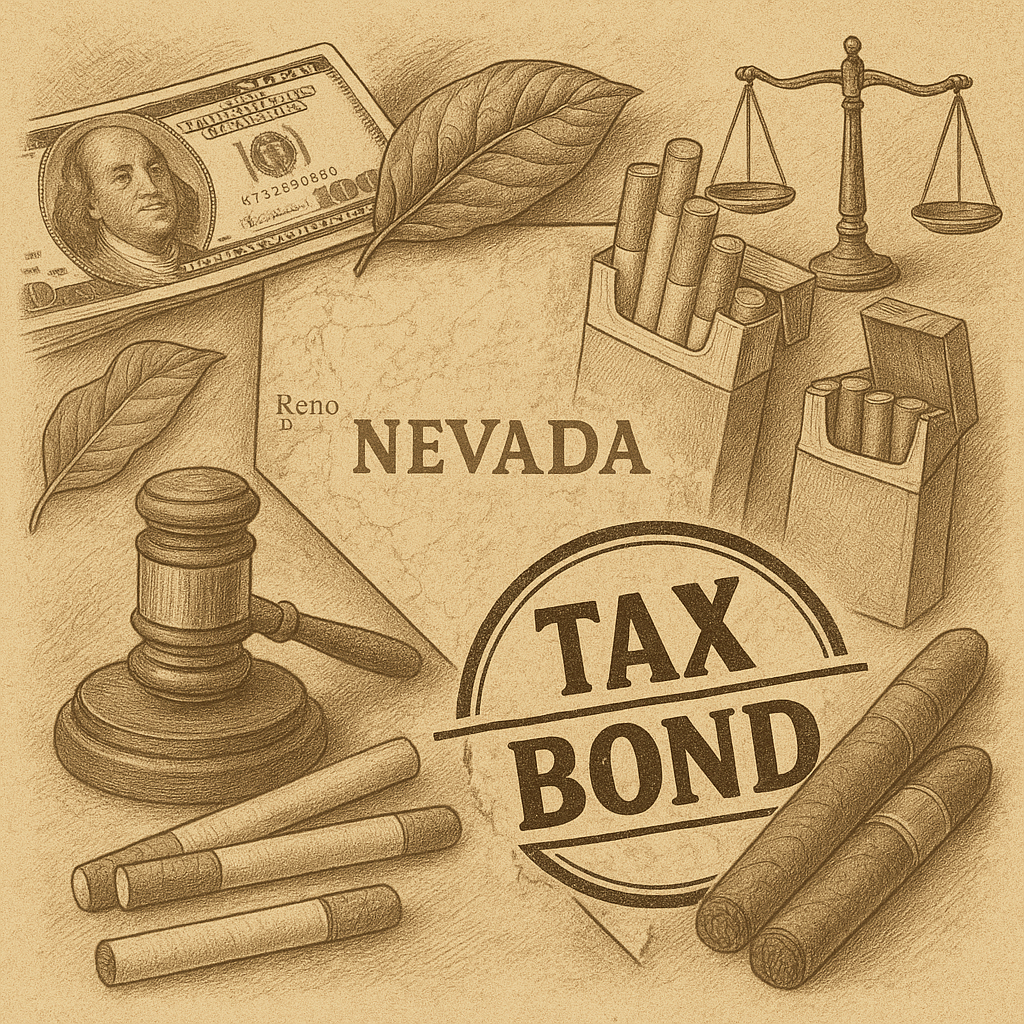
If your business deals with cigarettes, cigars, chewing tobacco, or other tobacco products in the Silver State, you may have come across the term Nevada cigarette and other tobacco products tax bond. At first glance, this can feel like just another piece of government paperwork. But understanding it can save you from fines, delays, and avoidable stress.
Think of this bond as a financial promise between your business, the state of Nevada, and a surety company. It’s not insurance in the traditional sense. Instead, it’s more like a security deposit that helps guarantee you’ll pay the excise taxes you owe under Nevada law.
What Is a Nevada Tobacco Tax Bond?
A Nevada tobacco tax bond is a type of surety bond required by the Nevada Department of Taxation. It applies to businesses that manufacture, distribute, sell, or import cigarettes and other tobacco products. The bond is tied directly to Title 32, Chapter 370 of the Nevada Revised Statutes.
In simple terms, the bond gives the state a layer of protection. If a business collects tobacco taxes from customers but fails to pass that money along to the state, the bond can be used to cover the missing amount. The state can then file a claim against the bond.
This protects public funds and ensures that businesses operating in Nevada follow the same tax rules.
Who Needs a Cigarette and Other Tobacco Products Tax Bond?
Not every corner store needs a separate bond just for selling cigarettes. The requirement usually applies to businesses that have a direct tax responsibility under NRS Chapter 370. That often includes:
- Cigarette wholesalers and distributors
- Importers bringing tobacco products into Nevada
- Manufacturers selling tobacco products directly to retailers
- Large retailers who handle untaxed tobacco products
- Vape and e-cigarette businesses that fall under other tobacco product rules
So how do you know if your business needs one? The best step is to contact the Nevada Department of Taxation or work with a surety bond professional who understands Nevada’s tobacco bonding rules. The state will typically notify you if a bond is required before issuing or renewing your tobacco license.
What Counts as “Other Tobacco Products”?
Under Nevada law, “other tobacco products” covers more than just cigarettes. It can include cigars, pipe tobacco, chewing tobacco, snuff, and in many cases, modern vaping products. If a product contains nicotine and is not already taxed as a traditional cigarette, it may still fall under the other tobacco products tax category.
This is important because the bond requirement often follows the tax requirement. If your business owes an excise tax on a product, you may need a bond to guarantee payment of that tax.
How Title 32 / Chapter 370 Works
Title 32, Chapter 370 is part of Nevada’s tax laws. It sets out the rules for cigarette and tobacco product taxes, including who must pay, how much is due, and when bonding is required.
An excise tax is a tax on specific goods, like tobacco, fuel, or alcohol. In many states, including Nevada, tobacco excise taxes are major sources of revenue. To protect that revenue, the state asks certain businesses to post a bond.
If your business pays its tobacco taxes on time and in full, the bond simply sits in the background. Think of it like a spare tire. You hope you never need it, but it’s there to keep you safe if something goes wrong.
How Does the Bond Actually Work?
Let’s walk through a simple example.
Imagine you run a wholesale cigarette distribution company in Las Vegas. The state requires a $50,000 cigarette tax bond before you can operate. You purchase that bond through a surety company. You pay a small percentage of the total amount as a premium, not the full $50,000.
Now imagine your business hits a rough patch and cannot pay $20,000 in tobacco excise taxes. The state can file a claim against your bond. The surety company may pay the state on your behalf. However, unlike insurance, you’re still responsible for that money. The surety will come back to you and expect to be fully reimbursed.
This is why it’s often compared to a cosigner on a loan. The surety says, “We trust you enough to back your promise, but if you break it, you owe us.”
How Much Does a Nevada Tobacco Tax Bond Cost?
The cost depends on two main factors: the bond amount required by the state and your financial background. Most businesses pay a premium of 1% to 5% of the total bond amount each year.
For example:
- A $10,000 bond might cost around $100 to $500 per year.
- A $25,000 bond might cost around $250 to $1,250 per year.
- A $100,000 bond might cost around $1,000 to $5,000 per year.
Business owners with strong credit often qualify for the lowest rates. Those with weaker credit may pay more, but it’s still possible to get bonded in many cases. The key is to work with a surety provider that understands tobacco tax bonds and can shop your application to multiple markets.
Why the State Requires This Bond
Nevada, like other states, uses tobacco tax revenue to fund public programs and services. When a business collects tax but doesn’t pass it along, the state loses money that was already owed. The bond gives the state a simpler way to recover those funds without lengthy court battles.
It also levels the playing field. Honest businesses shouldn’t have to compete with companies that skip their tax obligations. By requiring a bond, Nevada helps ensure all tobacco businesses operate under the same financial responsibility rules.
Common Mistakes to Avoid
Many businesses run into trouble simply because they don’t understand their bonding obligations. Here are a few common mistakes:
- Assuming a license is enough. A license and a tax bond are often separate requirements.
- Confusing the bond with insurance. A bond protects the state, not your business. You may still need general liability insurance for your own protection.
- Letting the bond lapse. If your bond expires, you could lose your tobacco license or face penalties.
- Guessing the bond amount. Always confirm the required amount with the Nevada Department of Taxation or a licensed surety professional.
How to Get a Nevada Cigarette and Other Tobacco Products Tax Bond
The process is usually straightforward. Here’s what you can expect:
- Confirm your required bond amount with the state.
- Complete a bond application with basic business and personal information.
- Receive a quote from the surety company.
- Pay the premium.
- Receive your bond form and file it with the Nevada Department of Taxation.
Many surety companies can issue bonds the same day for simple cases. If your business has complex financials or a large bond amount, the process might take a little longer.
What Happens If You Operate Without a Bond?
Operating without a required Nevada tobacco tax bond can lead to serious consequences. The state may deny your license application, suspend your current license, or issue fines. In some cases, continuing to sell tobacco products without proper bonding can even result in criminal penalties.
That’s a risk no business owner wants to take. If you’re unsure whether you need a bond, the smart move is to ask before you sell. A quick call to the Nevada Department of Taxation or a surety bond expert can save you from a much bigger headache later.
Is This Bond a One-Time Purchase?
No. Most Nevada tobacco tax bonds are continuous or renewable. You’ll typically need to pay a premium each year to keep the bond active. If your business grows and your tax liability increases, the state may also require a higher bond amount.
Keep your bond paperwork in a safe place and set a reminder before the renewal date. A lapsed bond can trigger immediate compliance issues.
Final Thoughts on Nevada Tobacco Tax Bonds
Understanding a cigarette and other tobacco products tax bond is less about red tape and more about protecting your ability to do business in Nevada. Once you know why the bond exists and how it works, it becomes a manageable part of running a compliant, trustworthy operation.
If your business sells or distributes tobacco products, take the time to confirm your bonding requirements. Work with a knowledgeable surety provider who can guide you through Title 32 / Chapter 370 and help you secure the right bond at the best possible rate. That way, you can keep your focus where it belongs: growing your business and serving your customers.