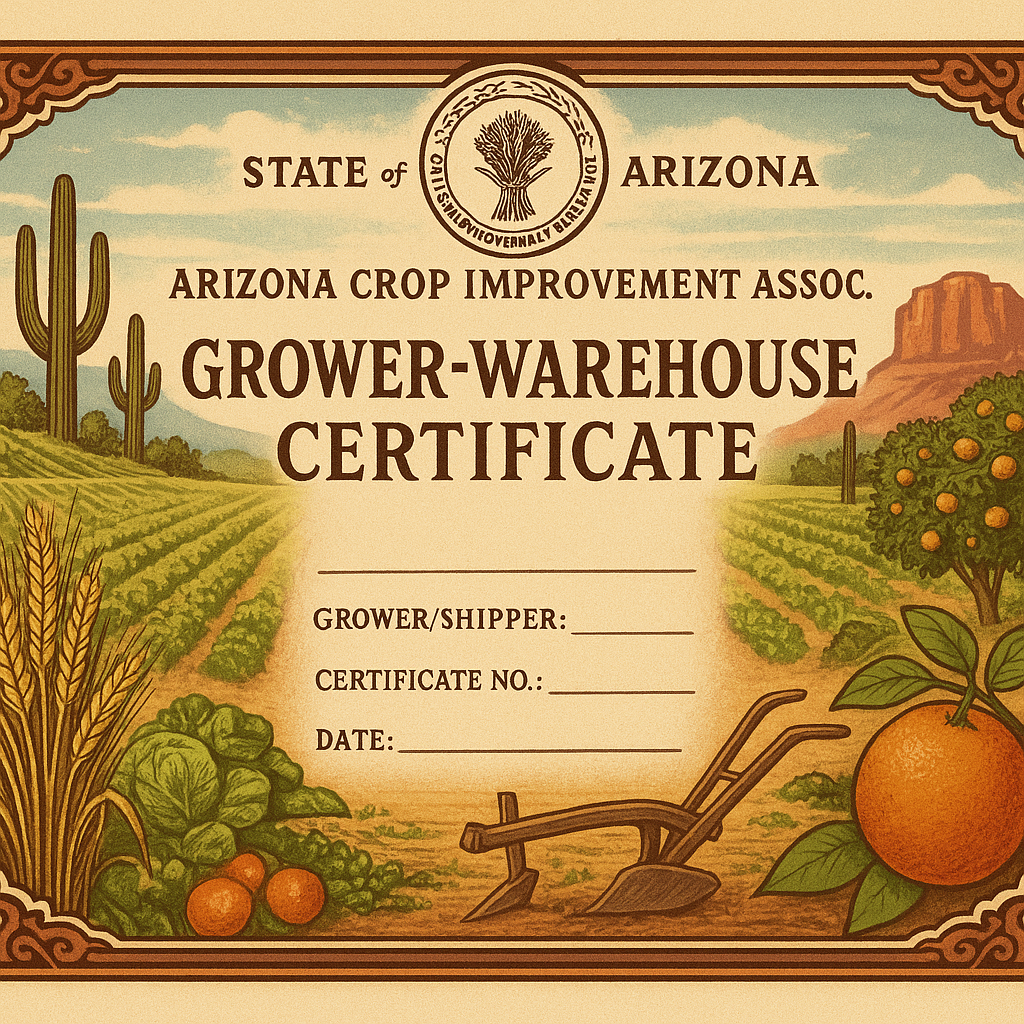
If you grow, handle, or ship agricultural products in Arizona, you know how important it is to keep everything running smoothly. One day you’re moving lettuce, the next it’s cottonseed or alfalfa. Behind the scenes, there are rules and paperwork that help protect everyone involved. One piece of that puzzle is the Arizona Grower-Warehouse Certificate, often called the Arizona Crop Improvement Association form. It might sound like just another document, but it plays a real role in keeping the state’s crop industry fair and reliable.
What Is an Arizona Grower-Warehouse Certificate?
At its heart, the Arizona Grower-Warehouse Certificate is a type of surety bond. You can think of it like a financial promise backed by money. When a grower or shipper gets this certificate, they are saying, “I will follow the rules set by the Arizona Crop Improvement Association and the State of Arizona.” If they don’t, the bond can step in to cover any financial harm caused to others.
It is not the same as regular business insurance. Insurance usually protects you from your own losses. A surety bond like this one protects other people—like buyers, sellers, and the association—from losses caused by your business. In other words, it is a safety net for the people you do business with.
The “Arizona Crop Improvement Association form” part simply refers to the specific paperwork used by this association. They help maintain quality standards for seeds, plants, and other agricultural products grown in the state. The bond is tied to those standards.
Who Needs This Grower-Warehouse Certificate?
Not every farm or trucking company will need this certificate. It usually applies to certain businesses that handle, store, or ship crops through channels connected to the Arizona Crop Improvement Association. This can include:
- Licensed growers who produce certified seed or other specialty crops.
- Warehouse operators who store these agricultural products before they are sold.
- Shippers and handlers who move crops from one point to another within Arizona.
If your business works with the Arizona Crop Improvement Association or needs to meet state requirements for crop certification, there is a good chance you will hear about this bond. The association or a state agency will usually let you know if it is required.
Why Does Arizona Require This Bond?
Arizona’s agricultural economy relies on trust. A buyer in another state might purchase a large shipment of certified seed without ever meeting the grower face to face. How do they know the seed is what the grower says it is? How do they know they won’t be left empty-handed after paying?
That is where the bond comes in. It gives everyone a layer of protection. If a grower or warehouse fails to meet their obligations—say, they don’t deliver the crops as promised, or they mishandle products that lead to financial loss—the harmed party can file a claim against the bond. This system keeps the market honest and helps smaller growers compete by showing they are trustworthy.
Think of it like a co-signer on a rental agreement. The landlord feels safe renting to you because someone else promises to cover the rent if you cannot. Here, the surety company acts like that co-signer for the grower or shipper.
How Does the Bond Actually Work?
There are three main parties involved in any surety bond:
- The principal: That is you—the grower, shipper, or warehouse operator who needs the bond.
- The obligee: That is the State of Arizona or the Arizona Crop Improvement Association. They require the bond to protect the public and the industry.
- The surety: That is the insurance company or bonding company that backs your promise with money.
If you break the rules and cause a financial loss to someone, that person can file a claim with the surety. The surety will investigate. If the claim is valid, the surety pays the harmed party up to the bond amount. But here is the key: you are still responsible for paying the surety back. The bond might feel like insurance, but it is really a form of credit. You are expected to repay every dollar the surety pays out.
For example, imagine you run a warehouse that stores certified seed for other farmers. If you accidentally sell that seed without permission and can’t pay the farmer back, the farmer could file a claim. The surety would compensate the farmer, and then come after you for that amount. It keeps everyone accountable.
Steps to Get Your Arizona Grower-Warehouse Certificate
Getting this bond does not have to be overwhelming. Most businesses can complete the process in a few days if they have their paperwork in order. Here is a simple path to follow:
- Confirm you need it. Check with the Arizona Crop Improvement Association or your local agricultural extension office. They can tell you if your specific operation falls under the requirement.
- Gather your business information. You will likely need your business license, financial statements, and details about your operation. Good record keeping speeds things up.
- Contact a surety bond provider. Many companies specialize in agricultural bonds. They will ask about your business history and credit.
- Get a quote. The provider will tell you how much the bond premium will cost. You pay only the premium, not the full bond amount.
- Submit your application. Once approved, the surety company will issue the bond form. You then file it with the Arizona Crop Improvement Association or the state agency that requested it.
What Does the Bond Cost?
The cost of your Arizona Grower-Warehouse Certificate depends on a few things. The bond amount—how much coverage the state requires—is the biggest factor. But you do not pay that full amount. Instead, you pay a premium, which is usually a small percentage of the total bond amount.
For most people, the premium lands somewhere between 1% and 5% of the bond amount. Your personal credit score and business financials play a big role. A strong credit history often means a lower premium. A business with financial challenges might pay more or need to provide additional documentation.
Let’s say the required bond amount is $20,000. If your premium rate is 2%, you would pay $400 for the bond. That is a one-time payment for the bond term, usually one year. You would renew it each year as long as the requirement continues.
Common Questions About Grower-Warehouse Bonds
Is this the same as crop insurance?
No. Crop insurance protects your own investment if weather, pests, or other disasters damage your crops. This bond protects other people if your business fails to meet its legal or contractual obligations. They serve two different purposes.
What happens if a claim is filed against my bond?
The surety company will investigate the claim. If they find it valid, they will pay the harmed party up to the full bond amount. Then they will ask you to reimburse them. If you refuse, the surety can take legal action to recover the money. Having a claim can also make it harder and more expensive to get bonded in the future.
Can I get this bond with bad credit?
Yes, in most cases you can still get bonded, but you may pay a higher premium. Some surety companies work specifically with businesses that have less-than-perfect credit. It is always worth shopping around and asking questions.
Why This Certificate Matters for Arizona Agriculture
Arizona’s agricultural industry is built on relationships. A seed grower in Yuma might sell to a distributor in Phoenix, who then ships to a farm in Texas. Each link in that chain depends on the other to do the right thing. The Arizona Grower-Warehouse Certificate acts as a quiet guarantee that the system works fairly.
By requiring this bond, the state and the Arizona Crop Improvement Association help level the playing field. Small growers can prove they are trustworthy without needing a huge pile of cash. Buyers can feel more confident making large purchases. And the whole industry keeps moving forward with fewer disputes.
So the next time you see this form on your desk, do not think of it as just another bureaucratic hurdle. It is really a tool that helps protect your business and the people you work with. If you are unsure whether you need one, reach out to the association. A quick conversation can save you time, money, and headaches down the road.
Final Thoughts
Understanding the Arizona Grower-Warehouse Certificate does not have to be confusing. At its core, it is a promise backed by money. It says you will follow the rules and treat others fairly. Getting one is usually a straightforward process, and the cost is based on your unique business situation.
If you are entering the world of certified seed, crop storage, or agricultural shipping in Arizona, make sure this bond is on your checklist. It is one small step that can open doors and build trust with every buyer and seller you meet.