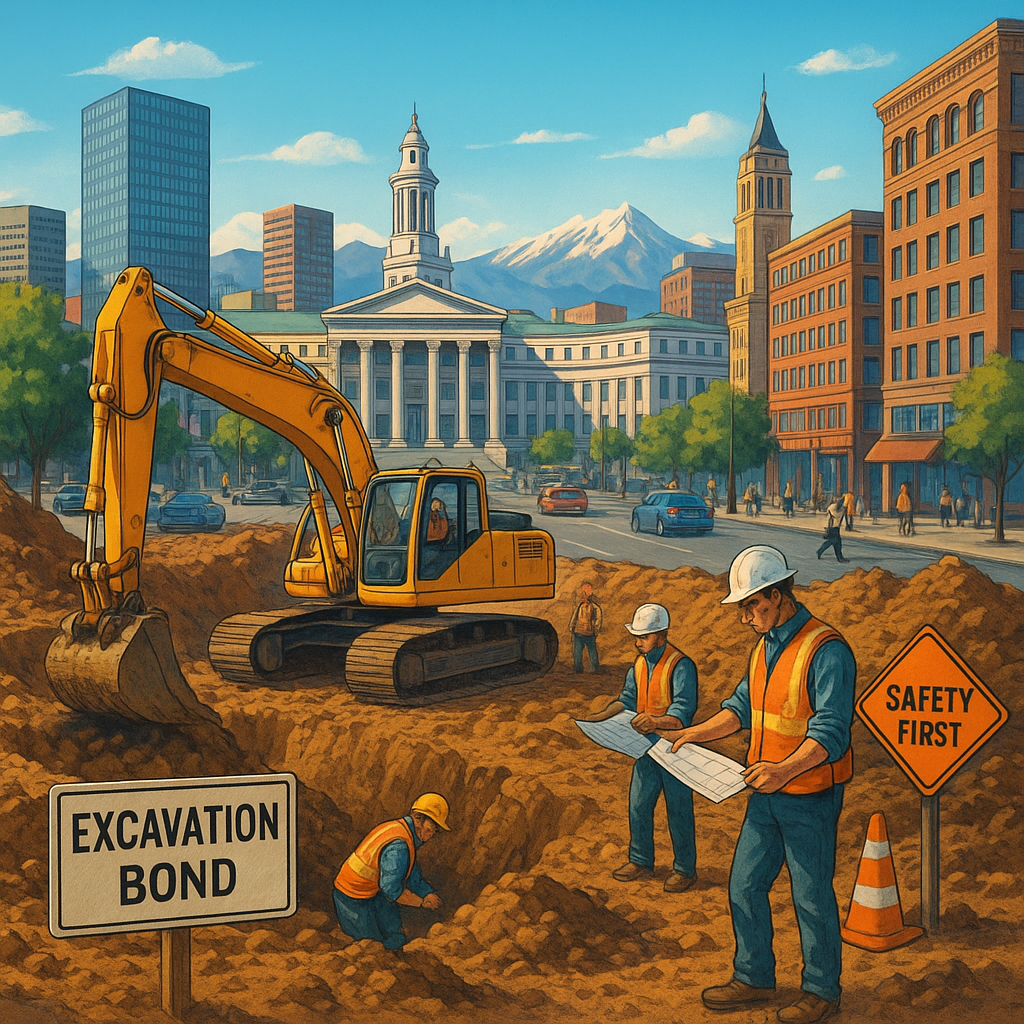
If you’re an excavation contractor in the Denver area, you’ve probably come across the term Denver excavation bond. You might also see it called an Excavation Contractor – 3rd Party Liability bond. It sounds complicated, but it doesn’t have to be. Let’s break down what this bond is, why the City and County of Denver requires it, and how it works alongside your liability coverage.
What Is an Excavation Bond?
An excavation bond is a type of surety bond. It acts as a financial promise between three parties: the contractor, the City and County of Denver, and the surety company. When you buy this bond, you’re telling the city that you’ll follow the rules, complete your work properly, and fix any damage caused by your digging.
Think of it like a security deposit. When you rent an apartment, the landlord holds a deposit in case you damage the unit. A Denver excavation bond works in a similar way. The city wants a financial guarantee that you’ll restore public property if something goes wrong.
If you fail to meet those obligations, the city can file a claim against your bond. The surety company may then pay for repairs or damages. But here’s the important part: you are still responsible for repaying the surety for any money it pays out on your behalf.
Why the City and County of Denver Requires Excavation Bonds
Denver is growing fast. Roads, sidewalks, sewer lines, and utility corridors are constantly being repaired or expanded. Excavation work is necessary, but it can also be risky. A small mistake underground can cause major damage to public infrastructure or private property.
The City and County of Denver requires an excavation bond to protect taxpayers and residents. If a contractor accidentally hits a water main or damages a road, repair costs can quickly add up. The bond provides a funding source so the city doesn’t have to chase down the contractor before fixing the problem.
The bond also encourages contractors to work safely. When your bond is on the line, you have a strong incentive to call for utility locates, follow local codes, and restore the site when the job is done.
Excavation Bond vs. Liability Insurance: What’s the Difference?
Many contractors confuse excavation bonds with liability insurance. They are not the same thing, and both are usually necessary.
An excavation bond protects the city and the public. It guarantees that you’ll meet your contractual and legal obligations. It does not protect you or your business.
On the other hand, liability insurance protects your business from covered accidents, injuries, and property damage claims. If an accident happens on the job, your insurance might cover legal fees or settlement costs.
Here’s an easy way to remember the difference:
- Bond: Protects the city and the public. You repay the surety for any claims paid out.
- Insurance: Protects your business. The insurance company covers covered losses according to your policy.
In Denver, the excavation bond is often listed as an Excavation Contractor – 3rd Party Liability bond. The name tells you exactly what it focuses on: damage to someone else’s property or public infrastructure caused by your work.
Who Needs a Denver Excavation Bond?
If you perform excavation work in the City and County of Denver, you may need this bond before you can pull a permit. This includes work in streets, alleys, sidewalks, and other public right-of-way areas. It can also apply to underground utility work, grading, trenching, and site preparation.
General contractors, excavation contractors, utility contractors, and even some subcontractors may fall under these rules. The exact requirements depend on the type of work and where it takes place. The Denver Department of Transportation and Infrastructure, often called DOTI, is the main agency to check with before starting any excavation project.
Imagine you’re hired to install a new sewer line beneath a residential street in Denver. Before DOTI issues the excavation permit, they may ask for proof of your bond and insurance. Without the proper bond, your permit could be delayed or denied.
How to Get Bonded in Denver
The process of getting a Denver excavation bond is usually straightforward. You apply through a surety bond company or an insurance agent that specializes in surety bonds. The surety will ask about your business history, financial standing, and the bond amount required by the city.
You don’t pay the full bond amount upfront. Instead, you pay a premium. That premium is typically a small percentage of the total bond amount. The rate often depends on your credit score and business experience.
For example, if the city requires a $10,000 bond, you might pay a premium of $100 to $500 per year. Contractors with strong credit usually pay lower rates. Once approved, you’ll receive a bond form to submit to the City and County of Denver along with your permit application.
Common Ways a Bond Claim Can Happen
No contractor plans to have a claim. But excavation work is unpredictable. Knowing the common triggers can help you avoid problems.
- Hitting an unmarked utility line: This can disrupt service and create expensive repairs.
- Damaging pavement or sidewalks: Heavy equipment can crack concrete or damage asphalt.
- Failing to restore a site: Leaving trenches open, unfinished patches, or debris can lead to complaints.
- Not following city codes: Working without proper traffic control or erosion measures can create safety hazards.
If a claim is filed, the surety company will investigate. If the claim is valid, the surety may pay the city. Then you’ll need to repay the surety. That’s why it’s best to treat a bond as a serious financial responsibility, not just a paperwork requirement.
Tips for Staying Compliant and Protecting Your Bond
Staying compliant with Denver’s excavation rules doesn’t have to feel overwhelming. A few simple habits can reduce your risk and keep your bond in good standing.
First, always call 811 before you dig. Utility locating is a critical step that helps you avoid hitting underground lines. Second, communicate clearly with DOTI and obtain the correct permits before starting work. Third, document the site before and after excavation with photos and notes. That evidence can be useful if a dispute arises.
It’s also smart to keep your bond active for the entire permit period. If your bond lapses while work is ongoing, the city may issue a stop-work order. Staying organized with your paperwork can save you from costly delays.
Frequently Asked Questions About Denver Excavation Bonds
Can I use my general liability insurance instead of a bond?
No. The City and County of Denver treats bonds and insurance separately. Insurance protects your business, while a bond protects the public. You’ll likely need both to get your excavation permit approved.
How much does a Denver excavation bond cost?
The cost depends on the bond amount and your credit history. Most contractors pay a small percentage of the total bond amount as an annual premium. Working with an experienced surety agent can help you find the best rate.
How long does an excavation bond last?
Most excavation bonds are issued for one year and need to be renewed. The city may also require the bond to stay active until the project is complete and any final inspections are passed. Always check the specific terms listed on your permit.
Does an excavation bond cover worker injuries?
No. Worker injuries are typically covered by workers’ compensation insurance, not an excavation bond. The bond focuses on third-party property damage and public infrastructure repairs.
Final Thoughts for Denver Excavation Contractors
Understanding your Denver excavation bond requirements is an important part of running a successful contracting business. The bond protects the City and County of Denver, the public, and your reputation as a responsible contractor. When you combine the right bond with solid liability coverage and safe work practices, you set your projects up for fewer headaches and better results.
Before your next dig, take time to confirm the current bonding rules with DOTI or your surety bond provider. A little preparation upfront can keep your equipment moving, your permits approved, and your business protected.