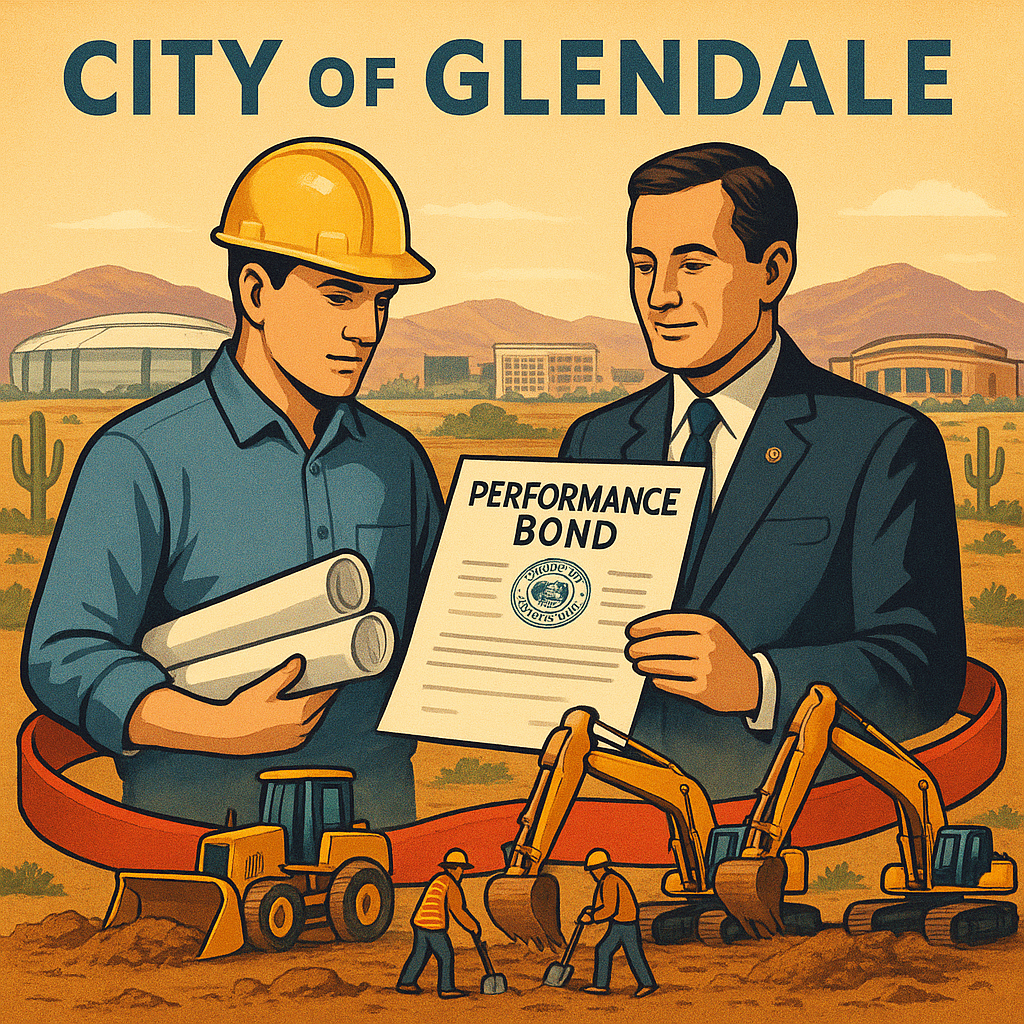
If you’re a contractor in Glendale, Arizona, and you take on clearing or earthwork projects, you’ve probably heard the term performance bond more than a few times. Maybe a city official mentioned it during a bid meeting, or you saw it listed in a contract checklist. It can sound like complicated paperwork, but at its heart, a performance bond is really just a promise—backed by money—that you’ll finish the job you agreed to do.
In this guide, we’ll break down everything you need to know about City of Glendale performance bonds, why they matter for clearing and earthwork contractors, and how you can get one without pulling your hair out.
What Is a Performance Bond?
Think of a performance bond like a safety net. If you hire a roofing company to replace your roof and they disappear halfway through the job, you’d want some way to recover your money or get the work finished. That’s essentially what a performance bond does—but on a much larger, municipal scale.
A performance bond is a type of surety bond that guarantees a contractor will complete a project according to the terms of the contract. If the contractor fails to deliver, the bond company steps in to either fix the problem or pay the project owner for the financial loss. For clearing and earthwork contractors in Glendale, this bond usually runs directly to the City of Glendale as the project owner or obligee.
In simple terms, the city wants assurance that taxpayer dollars aren’t wasted on half-finished land clearing, grading, or excavation work.
Why Glendale Requires Performance Bonds for Clearing and Earthwork
Glendale is growing. New developments, road expansions, utility installations, and public infrastructure projects all require significant land preparation. Clearing and earthwork are the first major steps. If those steps go wrong, everything else gets delayed.
The City of Glendale requires performance bonds to protect public interests. Here’s why:
Protecting the City’s Investment
When Glendale awards a contract for clearing or earthwork, they’re investing public funds. A performance bond ensures that if the contractor fails to finish, the city won’t be left holding an empty bag. The bond acts as a financial cushion, giving the city a way to recover losses and hire another contractor to complete the work.
Ensuring Contractors Finish the Job
Earthwork isn’t glamorous, but it’s essential. Poor grading can cause drainage issues. Improper clearing can lead to erosion or safety hazards. The city needs to know that the contractor who starts the job will also finish it—correctly. A City of Glendale performance bond gives officials confidence that the contractor has been vetted by a surety company and is financially capable of completing the project.
Promoting Fair and Responsible Bidding
Performance bonds also help level the playing field. Contractors who can secure bonding have passed a financial review. This discourages underqualified or undercapitalized bidders from promising more than they can deliver. For local contractors, it means competing against others who are equally serious and capable.
How a City of Glendale Performance Bond Works
Understanding the moving parts can make the process feel less intimidating. A performance bond involves three main parties.
The Three Parties Involved
- The Obligee: This is the City of Glendale. They require the bond and receive protection under it.
- The Principal: This is you, the clearing or earthwork contractor. You purchase the bond and promise to complete the work.
- The Surety: This is the bond company. They back your promise financially if you default.
When the city approves your contract, they’ll typically ask for a performance bond before you can start moving dirt. The bond amount is often equal to the full contract value, though sometimes it’s a percentage.
What the Bond Covers
A Glendale performance bond covers more than just walking off the job. It can protect the city if you:
- Fail to complete the project on schedule
- Perform substandard work that doesn’t meet contract specifications
- Fail to pay subcontractors or suppliers, leading to liens against the project
- Violate local building codes or environmental regulations
If a claim is filed and found valid, the surety may step in to finance the completion of the project or pay the city up to the bond amount. But it’s important to remember: the surety will come back to you for repayment. A bond isn’t insurance for the contractor—it’s a guarantee that you’ll fulfill your obligations.
Clearing and Earthwork: Why These Projects Are Unique
Clearing and earthwork projects carry special risks. They often involve heavy machinery, unpredictable soil conditions, environmental regulations, and tight deadlines. A site might look straightforward on paper, but contractors know that once you start digging, surprises happen.
Because of these risks, Glendale treats clearing and earthwork contracts with extra caution. A performance bond gives the city a way to manage that risk without micromanaging every bulldozer and dump truck.
For contractors, securing a bond also sends a message: you’re stable, trustworthy, and ready to handle the unexpected. That can be a strong selling point when bidding on future city projects.
How to Get a Performance Bond in Glendale
If you’re new to bonding, the process might feel like a hurdle. But with the right preparation, it’s manageable. Here’s a simple step-by-step look at what to expect.
Steps to Apply
- Gather Your Financial Documents: Surety companies want to see that you’re financially healthy. This usually includes business and personal financial statements, tax returns, and bank statements.
- Prepare a Work History: Show that you’ve completed similar projects successfully. References from past clients or general contractors can help.
- Choose a Reputable Surety Broker: A broker who understands construction bonds can shop your application to multiple surety companies and find the best fit.
- Submit Your Application: The surety will review your credit, experience, and financial stability. For larger bonds, they may ask for additional documentation.
- Receive Your Bond Quote: If approved, you’ll get a premium—usually a percentage of the total bond amount. For well-qualified contractors, this can range from 1% to 3%.
- Pay the Premium and Get Your Bond: Once you pay, the surety issues the bond, and you can file it with the City of Glendale.
It’s a good idea to start this process early. Waiting until the last minute can delay your project start date and create unnecessary stress.
Common Questions About Glendale Performance Bonds
Is a performance bond the same as insurance?
No. Insurance protects you from unexpected losses. A performance bond protects the project owner—in this case, the City of Glendale—from your failure to perform. If a claim is paid, you’re responsible for reimbursing the surety.
How much does a performance bond cost?
The cost depends on the bond amount, your credit score, business financials, and project complexity. Many contractors pay between 1% and 3% of the bond amount. So for a $500,000 bond, you might pay $5,000 to $15,000.
Can a small contractor get bonded?
Yes. Smaller contractors can often secure bonds for smaller projects, especially if they have solid financials and a good track record. Working with an experienced surety broker can help you find a company that’s willing to work with your size and experience level.
What happens if I can’t finish the project?
If you default, the city can file a claim against your bond. The surety will investigate. If the claim is valid, the surety may arrange for another contractor to complete the work or compensate the city. You’ll then owe the surety for the amount they paid out, plus legal costs.
Final Thoughts
A City of Glendale performance bond might feel like one more box to check, but it plays a vital role in protecting public projects and maintaining trust between contractors and the community. For clearing and earthwork contractors, it’s not just about satisfying a contract requirement—it’s about proving your reliability and setting yourself up for future success.
If you’re preparing for a Glendale clearing or earthwork project, start the bonding process early. Gather your paperwork, talk to a knowledgeable surety broker, and understand the terms before you sign. With the right preparation, you can secure your bond, get to work, and build a reputation that keeps the city calling you back.
Remember, every big project starts with the ground beneath your feet. A solid bond helps ensure that ground—and your business—stays stable.