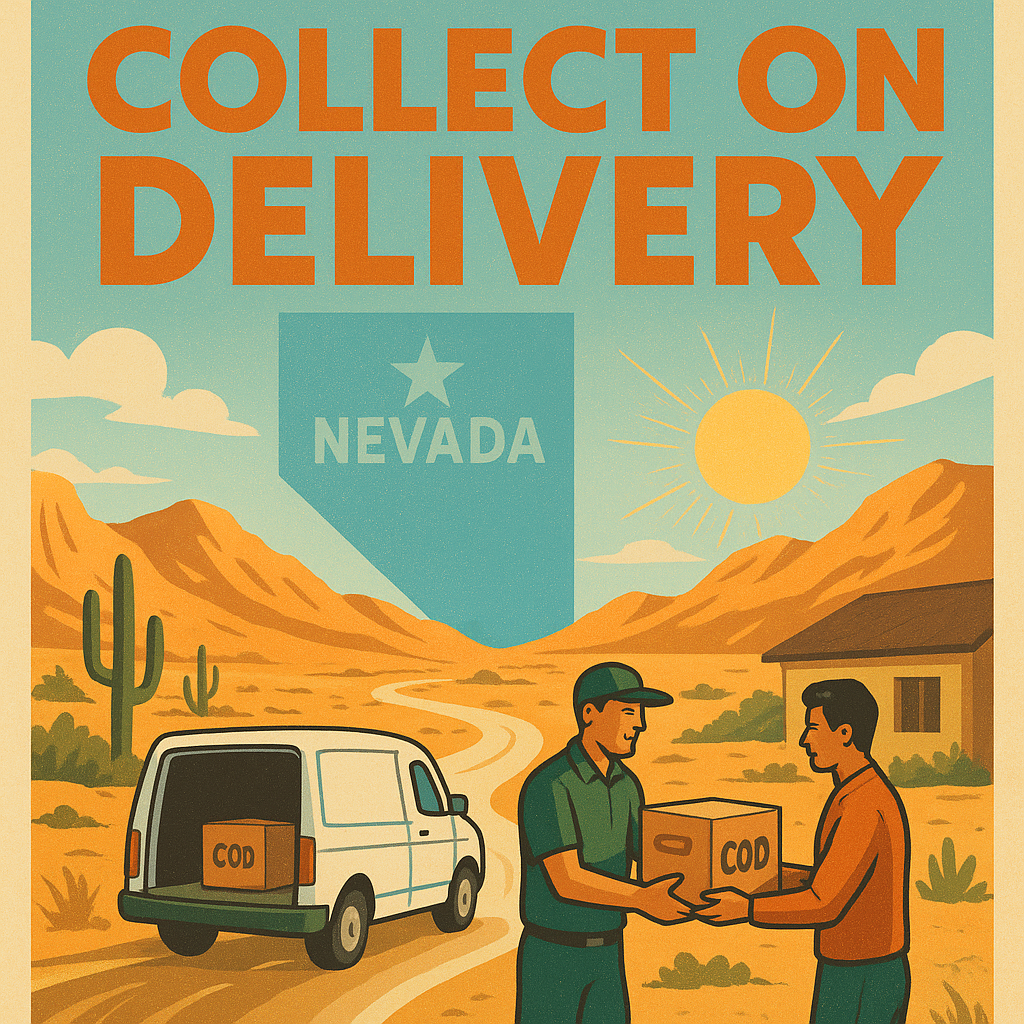
Imagine a customer in Reno orders a piece of furniture. The truck arrives, the customer hands over payment at the door, and the driver heads off. That is collect on delivery (COD) in action. It’s convenient, but it also creates a lot of trust. The state of Nevada wants to make sure that trust is backed by something real. That is where the Nevada Collect on Delivery Bond comes in.
If your business offers COD shipping, you may have seen this requirement on a licensing checklist or heard about it from a partner. It can feel confusing at first, but the idea is simpler than it sounds. Let’s break it down in plain language.
What Is Collect on Delivery Shipping?
Collect on delivery, or COD, is a shipping method where the customer pays for goods when they receive them rather than paying ahead of time. The carrier collects the payment from the buyer and then passes that money back to the seller or shipper.
Think of COD like a restaurant where you pay after the meal instead of before. The server brings your food, you enjoy it, and then you settle the bill. In shipping, the driver acts a bit like that server. They deliver the product and collect the payment at the same time.
This system builds convenience, but it also creates risk. Money is moving through more hands. If a shipper collects payments and fails to pass them along, customers and businesses can lose out. That’s why Nevada keeps a close watch on COD shippers.
Why Nevada Cares About COD Shippers
Nevada is a busy state for commerce. Goods move through Las Vegas, Reno, Henderson, and rural communities every day. When cash or payments are collected at the door, there are more chances for mistakes, disputes, or even fraud.
State regulators want to protect the public. They also want to keep the shipping industry fair. A Collect on Delivery Bond in Nevada gives everyone a financial safety net. It tells customers and business partners that your company is serious about following the rules.
Ask yourself: would you hand payment to a carrier you didn’t trust? Probably not. A bond helps build that trust before a single package is delivered.
What Is a Nevada Collect on Delivery Bond?
A Nevada Collect on Delivery Bond is a type of surety bond. It is not the same as business insurance, even though many people mix them up. A surety bond is a three-party agreement.
- The principal: That’s your business, the COD shipper.
- The obligee: That’s the state of Nevada or the agency requiring the bond.
- The surety: That’s the company that backs the bond financially.
In simple terms, the bond is a promise. Your business promises to follow Nevada’s COD rules. If you don’t, a claim can be made against the bond. The surety may pay out first, but you are ultimately responsible for repaying that amount.
You can think of it like a security deposit. The state requires it to make sure you will do the right thing. If everything runs smoothly, the bond just sits there quietly in the background.
Who Needs a COD Bond in Nevada?
Not every online store needs this bond. But if your company transports goods and collects payments on delivery within Nevada, you might. The requirement often applies to carriers, couriers, freight companies, and moving businesses that handle COD transactions.
Here are a few common examples.
- A local courier service delivering packages and collecting cash or checks.
- A trucking company hauling freight with COD terms for a supplier.
- A moving company that collects payment when household goods arrive.
- A third-party logistics provider managing delivery and payment collection for multiple clients.
If your business fits one of these descriptions, check with the state agency that issued your license or permit. They can confirm the exact bond amount your operation needs.
How the Bond Protects Everyone
A bond might sound like just another government hoop to jump through. But it actually helps everyone involved.
For customers, the bond offers a path to recover money if a shipper collects payment and disappears. For sellers, it reduces the risk of working with unreliable carriers. For the state, it creates a clear financial consequence for bad actors. For your business, it signals that you operate with integrity.
Picture a rideshare driver with a license displayed on the dash. That small card tells you the driver has met certain standards. A COD bond works the same way. It is a quiet badge of accountability.
How to Get a Nevada Collect on Delivery Bond
Getting a COD bond in Nevada is usually a straightforward process. It does not have to eat up your week. Here’s how it typically works.
1. Confirm Your Required Bond Amount
The state will tell you how much coverage you need. The amount can vary depending on your business type, the value of goods you handle, or current Nevada rules. Never guess. Always get the official number from the agency managing your license.
2. Apply With a Bond Provider
You can work with a surety bond agency or broker. They will ask for basic business information and sometimes run a credit check. Think of it like applying for a financial product. The stronger your credit, the smoother the process.
3. Pay a Small Percentage
You do not usually pay the full bond amount. Instead, you pay a premium. That premium is often a small percentage of the total bond. For example, if your bond is $10,000, your premium might be only a few hundred dollars per year.
4. File the Bond With the State
Once your bond is issued, you’ll need to file it with the appropriate Nevada agency. This step makes the bond active and keeps your license or permit in good standing.
What Affects the Cost of a COD Bond?
The price you pay depends on a few things. Your credit score is one of the biggest factors. Businesses with strong credit often pay lower rates. Businesses with weaker credit may still get approved, but the premium can be higher.
The bond amount also matters. A larger bond costs more because it carries more financial exposure for the surety company. Your industry experience and business history can play a role too.
If you are worried about the cost, remember that a bond is not a one-time purchase. It is usually renewed every year. Budget for it like you would for a license or registration fee.
Common Mistakes to Avoid
When dealing with any bonding requirement, a few simple mistakes can cause delays or extra costs. Watch out for these.
- Guessing the bond amount: Always verify with the state. An incorrect amount can hold up your license.
- Confusing a bond with insurance: A bond protects the public and the state. It does not protect your business from every loss.
- Letting the bond lapse: If your bond expires, you could face fines or lose your ability to operate.
- Hiding business issues from your bond provider: Be honest during the application. It helps you get the right coverage faster.
Keeping Your Nevada COD Bond in Good Standing
Once your bond is in place, your job is not over. You need to maintain it. Keep your payments current, renew on time, and inform your bond provider if your business changes address or ownership.
If a claim is filed against your bond, take it seriously. Respond quickly and work with your surety to resolve the issue. Acting fast can help protect your business reputation and your finances.
Think of your bond like a car registration. It is easy to forget about until something goes wrong. But staying on top of it keeps you on the road without stress.
Final Thoughts
Nevada’s Collect on Delivery Bond might feel like one more box to check. But it is really a tool that protects your customers, your partners, and your business. By understanding what the bond is and how it works, you can move through the process with confidence.
If you operate a COD shipping service in Nevada, don’t wait until a licensing deadline sneaks up on you. Confirm your bond amount, gather your business details, and apply through a trusted surety provider. A little preparation today can keep your deliveries rolling tomorrow.