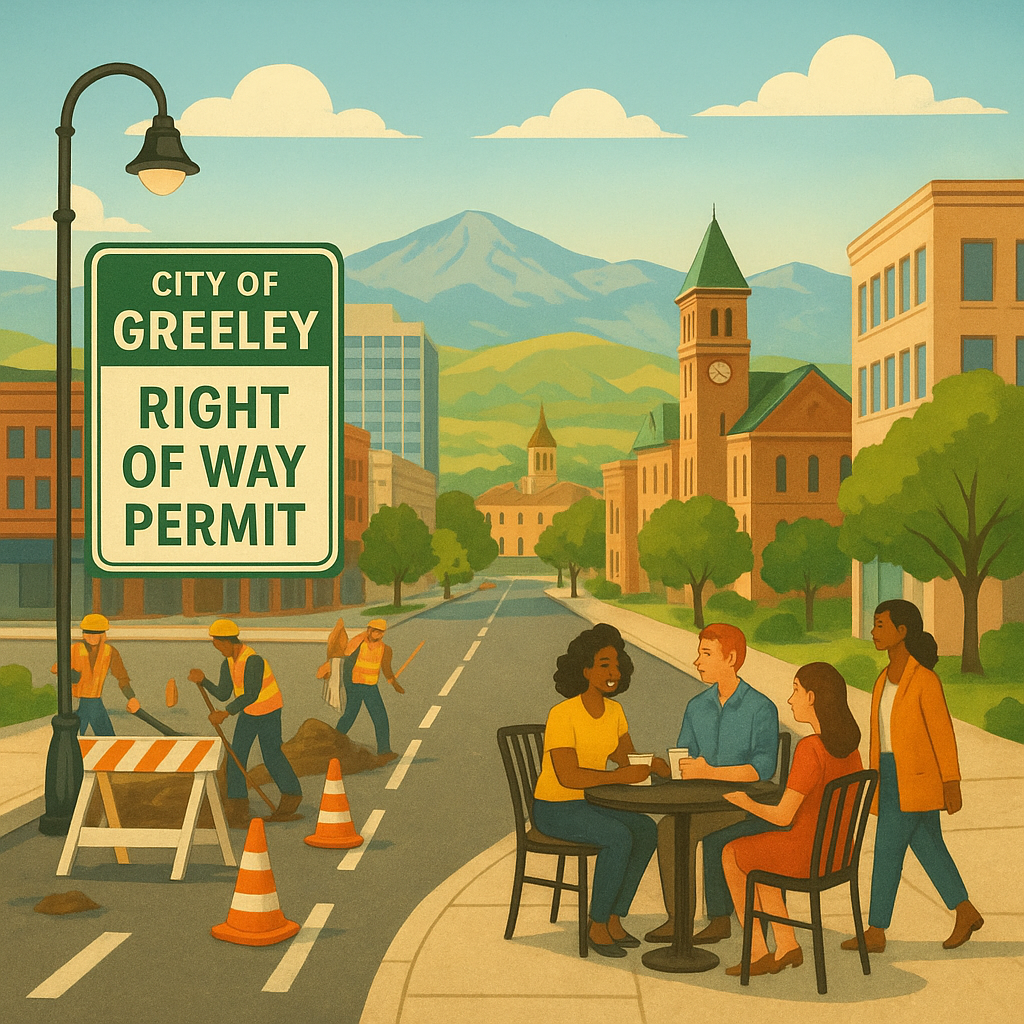
If you are planning to do construction, utility work, or even some landscaping in Greeley, Colorado, you may have heard the term “right of way permit bond.” It can sound like confusing government paperwork, but it is actually much simpler than it seems. Whether you are a contractor, a business owner, or someone exploring local permit rules, this guide will help you understand how these bonds work and why the City of Greeley asks for them.
What Is a Right of Way Permit Bond in Greeley?
A right of way permit bond is a type of financial guarantee. In Greeley, the public right of way generally includes areas like sidewalks, streets, curbs, gutters, alleys, and sometimes utility strips. When you get permission to work in those areas, the city wants to make sure the work will be done safely and that any public property will be restored properly.
Think of the bond as a security deposit. The City of Greeley is not trying to make life harder for contractors. Instead, the bond protects the community if a project causes damage or is left unfinished. If something goes wrong, the city can use the bond to help cover repairs.
Why the City of Greeley Requires This Bond
Working in a public right of way carries real risks. Digging near a sidewalk can damage pavement, cutting into a street can affect traffic, and trenching near utilities can create safety hazards. The City of Greeley requires a bond because it gives the public a layer of protection.
Without a bond, the city and local taxpayers could be stuck paying for mistakes that a contractor should fix. The bond helps ensure there is money set aside to correct problems. In simple terms, it is a promise backed by a third party that the contractor will follow the rules and complete the work properly.
Who Needs a Right of Way Permit Bond in Greeley?
Generally, anyone performing work in a public right of way within the City of Greeley may need this type of bond. This can include:
- General contractors doing street cuts or sidewalk repairs
- Utility companies installing or repairing lines
- Plumbers and electricians working on underground connections
- Excavation and grading companies
- Landscapers or fence installers working near public sidewalks or alleys
If the city tells you that a right of way permit bond is required, it is best to ask for the exact bond amount and any specific rules before starting work.
How the Bond Works: Three Parties Explained
Right of way permit bonds involve three main parties. Knowing who they are can make the process feel less intimidating.
The Principal
The principal is the contractor or business that needs the bond. You are the principal if you are applying for the permit and performing the work.
The Obligee
The obligee is the City of Greeley. The city requires the bond to protect public property and the local community.
The Surety
The surety is the company that issues the bond. The surety backs your promise financially. If a valid claim is made, the surety may pay the city up to the bond amount. Afterward, the surety will generally seek repayment from the contractor.
What Does the Bond Actually Cover?
A right of way permit bond in Greeley is designed to cover issues related to the permitted work in public areas. This can include:
- Repairing damaged pavement, sidewalks, curbs, or gutters
- Fixing damage to public utilities caused by the work
- Cleaning up debris left in the right of way
- Correcting work that does not meet city standards
- Addressing unfinished work that creates a safety hazard
It is important to remember that this bond is not the same as general liability insurance. It does not typically cover worker injuries, damage to your own equipment, or disputes that are unrelated to the right of way permit.
How Much Does a Right of Way Permit Bond Cost?
The required bond amount is set by the City of Greeley and can vary depending on the scope of the project. Some smaller jobs may need a bond of a few thousand dollars, while larger projects could require a higher amount.
The cost to you is not the full bond amount. Instead, you pay a premium, which is usually a small percentage of the total bond. For many contractors, that premium falls between one and five percent. For example, if the city requires a $10,000 bond, your premium might be somewhere between $100 and $500. Your exact rate will depend on your credit history, business experience, and the bond amount.
How to Get a Right of Way Permit Bond in Greeley
Getting a bond is usually a straightforward process. Here are the typical steps:
- Contact the City of Greeley to confirm the exact bond amount and permit requirements.
- Gather your business information, including your legal business name and contact details.
- Apply for the bond through a licensed surety company or bond agency.
- Pay the premium after receiving a quote.
- Receive the bond form and submit it to the city as part of your permit application.
Many agencies can issue these bonds quickly, sometimes within the same day. However, it is wise to start early so the bond does not delay your project.
Common Mistakes to Avoid
Even experienced contractors can run into trouble when handling right of way permit bonds. Avoiding these common mistakes can save you time and money.
- Guessing the bond amount: Always confirm the required amount with the city before buying a bond.
- Confusing a bond with insurance: A bond protects the city, while insurance protects your business. You may need both.
- Waiting until the last minute: While bonds are often fast, unexpected delays can happen.
- Letting the bond lapse: Make sure the bond stays active for as long as the city requires.
- Ignoring permit conditions: Know what the city expects so you can avoid claims against your bond.
Frequently Asked Questions About Greeley Right of Way Bonds
Is a right of way bond the same as insurance?
No. A bond is a three-party agreement that protects the City of Greeley. Insurance generally protects your own business from covered losses. Even if you have liability insurance, the city may still require a bond.
Can I use a cash deposit instead of a bond?
Some cities allow alternatives, but you will need to check directly with the City of Greeley. In many cases, a surety bond is preferred because it costs less than tying up cash for the full bond amount.
How long does the bond need to stay in effect?
The required duration varies. Some bonds stay active until the project is completed and the city inspects the work. Others may need to remain in place for a maintenance period after completion. Always ask the city for specific time requirements.
Final Thoughts
Understanding a right of way permit bond in Greeley, Colorado does not have to be complicated. At its core, the bond is simply a way for the city to protect public property while allowing contractors to do important work. By knowing who needs the bond, how it works, and what it costs, you can approach your project with confidence.
If you are planning work in a public right of way, start by contacting the City of Greeley to learn the exact permit and bond requirements. Then work with a reputable surety agency to secure your bond quickly. With the right preparation, you can keep your project moving and show the community that you are committed to doing the job correctly.