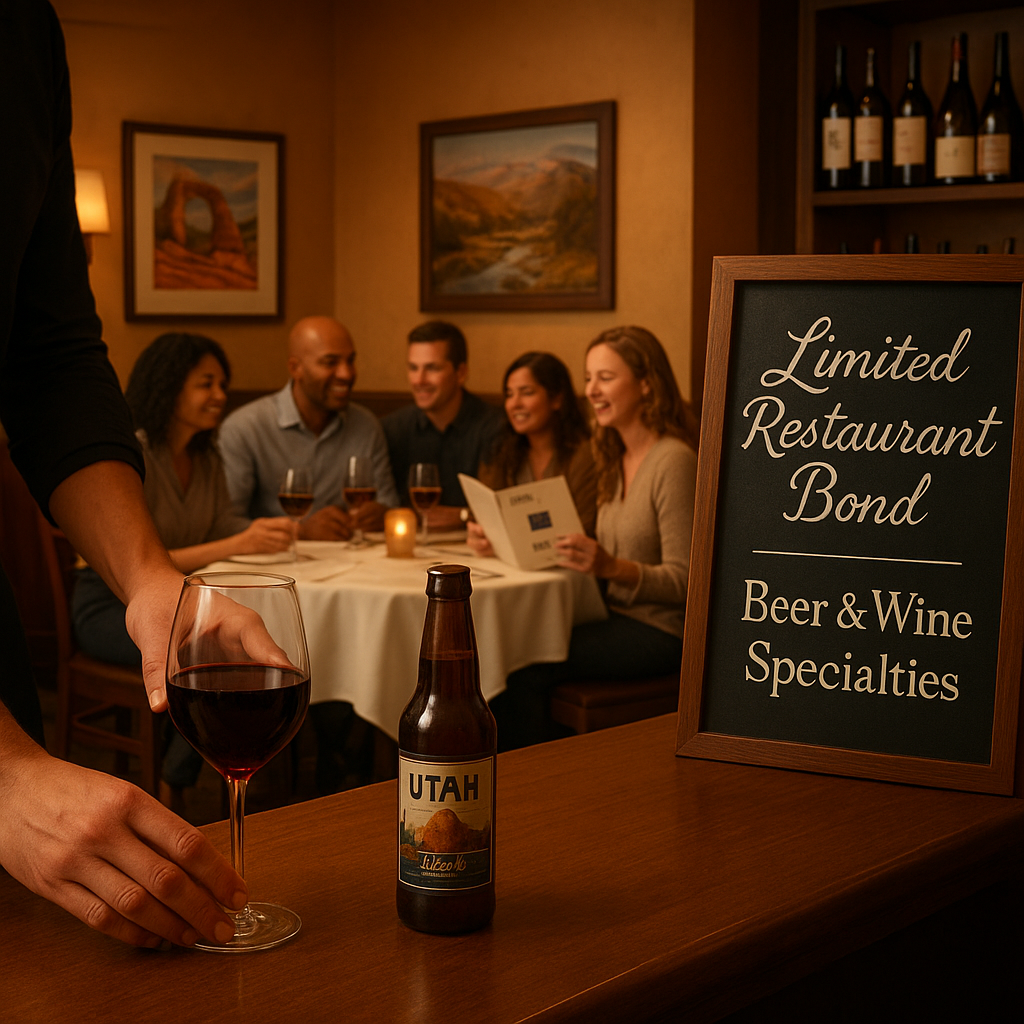
Opening a restaurant in Utah comes with plenty of moving pieces. You have to find the right spot, build a menu, hire a team, and figure out the local rules. If you want to serve beer or wine, there is another layer: the Utah Department of Alcoholic Beverage Control, also known as DABC. Many restaurant owners hear about a “limited restaurant license” and a “limited restaurant bond” and feel a little lost. The good news? Once you break it down, it is much easier to understand than it first appears.
In this post, we’ll walk through how Utah’s limited restaurant alcohol license works, why the bond matters, and what you need to know before you pour your first glass.
What Is a Limited Restaurant License in Utah?
A limited restaurant license in Utah is a specific type of alcohol permit. It allows a qualifying restaurant to sell beer and wine for consumption on the premises. The word “limited” is important. This license does not allow you to sell distilled spirits like vodka, whiskey, gin, or tequila. If you want a full bar setup, you will need a different license class.
Think of the limited restaurant license as a middle ground. You can offer wine with dinner and beer with a burger, but you are not running a cocktail lounge. The focus of your business must remain on food service, not alcohol sales. Utah’s beverage regulations are built around that idea, and the DABC enforces it closely.
Understanding the Role of the Utah Department of Alcoholic Beverage Control
The Utah Department of Alcoholic Beverage Control is the state agency that oversees how alcohol is sold, served, and consumed. If you want to serve beer and wine in a restaurant, the DABC is the gatekeeper. They process applications, review compliance, and issue the licenses that keep your business legal.
You can think of the DABC like a referee. They are not there to make your life difficult. Their job is to make sure everyone follows the same rules. When you apply for a limited restaurant license, the DABC looks at your location, your business plan, your ownership structure, and your willingness to follow Utah’s alcohol laws. They also check whether you have the proper bond in place.
What Is a Limited Restaurant Bond?
This is where many people get confused. A limited restaurant bond is not the same as business insurance. It is a surety bond, which is a three-party financial guarantee. The three parties are:
- The principal: That is you, the restaurant owner.
- The obligee: That is the Utah Department of Alcoholic Beverage Control.
- The surety: That is the company that issues the bond.
So what does the bond actually do? In simple terms, it is a promise. You promise to follow the rules tied to your beer and wine license. If you break those rules and owe fines, taxes, or other penalties, the bond can be used to cover those costs. The surety company may pay out first, but you are ultimately responsible for paying them back.
A good analogy is a security deposit on an apartment. The landlord holds the deposit in case something goes wrong. If you leave the apartment in good shape, you get the deposit back. A bond works in a similar way, except the state does not hold your cash. Instead, a surety company guarantees that money is available if a valid claim happens.
Why the Beer and Wine Limited Restaurant Bond Matters
You might wonder why the state requires a bond just to serve beer and wine. The answer comes down to accountability. Alcohol service carries responsibility. A restaurant has to follow rules about serving hours, ID checks, food requirements, and employee training. If a business violates those rules, there can be financial consequences.
The bond gives the state a way to protect the public and recover certain costs. It also encourages restaurant owners to stay compliant. No one wants a claim on their bond. A claim can increase your future costs and cause headaches with the DABC.
For many small restaurant owners, the bond is not a huge upfront expense. You pay a small percentage of the total bond amount, often based on your credit and business history. The exact requirement can vary, so you should confirm the current bond amount with the DABC or a licensed surety provider.
Who Needs a Utah Limited Restaurant Bond?
If you are applying for a limited restaurant license in Utah to sell beer and wine, you will likely need to obtain a bond as part of the licensing process. The requirement is tied to the license class. Some restaurants may also need a bond if they are renewing a license or changing their business structure.
It is always smart to check with the DABC before assuming you are exempt. Rules can change, and your specific situation may have extra steps. Even if the bond feels like an extra box to check, it is part of doing business the right way in Utah.
Key Beer and Wine Rules to Keep in Mind
Getting your license and bond is only part of the picture. You also need to understand the day-to-day rules that come with serving beer and wine under a limited restaurant license. Here are a few common areas to watch:
On-Premise Consumption Only
A limited restaurant license generally allows beer and wine to be consumed on the premises. You are not running a package store. Guests should not be leaving with open containers or taking bottles to go unless the law specifically allows it in certain situations.
Food Must Be Central
Because this is a restaurant license, food service has to be the main event. Alcohol is meant to complement the dining experience. The DABC may look at things like food sales, menu variety, or dining area setup to confirm your business qualifies as a restaurant.
Employee Training
Anyone serving alcohol should know how to check IDs, recognize signs of intoxication, and refuse service when necessary. Utah takes alcohol service seriously, and proper training helps prevent violations that could trigger a bond claim or put your license at risk.
Local Rules Still Apply
In addition to state regulations, your city or county may have its own zoning rules, distance restrictions, or business license requirements. Make sure your location is approved for the type of alcohol service you plan to offer.
How to Apply for a Utah Limited Restaurant License and Bond
The application process can feel overwhelming, but breaking it into steps helps. Here is a simple roadmap:
- Confirm your business qualifies: Make sure your restaurant meets the basic food service and location requirements.
- Check local regulations: Verify zoning and business license requirements with your city or county.
- Submit your DABC application: Provide the required business information, ownership details, and any supporting documents.
- Obtain your limited restaurant bond: Work with a surety provider to secure the bond amount required by the DABC.
- Prepare for inspection or review: The DABC may review your location, records, or operations before final approval.
- Train your team: Make sure everyone understands Utah’s beer and wine service rules.
- Keep your bond and license current: Renew on time and stay compliant to avoid interruptions.
The timeline can vary. Starting early is one of the best ways to avoid delays. If you wait until the week before your grand opening, you may run into trouble.
Common Mistakes to Avoid
When navigating Utah’s limited restaurant license and beverage regulations, a few mistakes pop up again and again. Avoiding them can save you time and money.
Assuming the license covers all alcohol. A limited restaurant license does not include spirits. If you want to serve cocktails, you will need a different license type. Make sure the license matches your actual menu.
Treating the bond like insurance. A surety bond is not the same as liability insurance. It protects the state and the public, not your business. You still need proper business insurance for your own protection.
Ignoring renewal deadlines. Licenses and bonds often need to be renewed. Missing a deadline can lead to fines, a lapse in coverage, or even a suspension of your ability to serve alcohol.
Overlooking employee training. Even with the right license and bond, an untrained server can cause a costly violation. A simple mistake like serving a minor could put your entire license in jeopardy.
Not asking questions. Utah’s alcohol rules are detailed. If something is unclear, reach out to the DABC or a knowledgeable surety provider. It is better to ask before you pour than to fix a problem afterward.
Navigating the Process With Confidence
Running a restaurant in Utah is hard work, but the beverage side does not have to feel impossible. The limited restaurant license gives you a clear path to serve beer and wine without the complexity of a full bar license. The limited restaurant bond adds a layer of financial responsibility, showing the state that you are serious about following the rules.
If you are planning to serve beer and wine in your Utah restaurant, start by understanding what the DABC requires for your specific situation. Then get your bond in place, train your staff, and stay on top of renewals. With the right preparation, you can focus less on paperwork and more on creating a great dining experience for your guests.