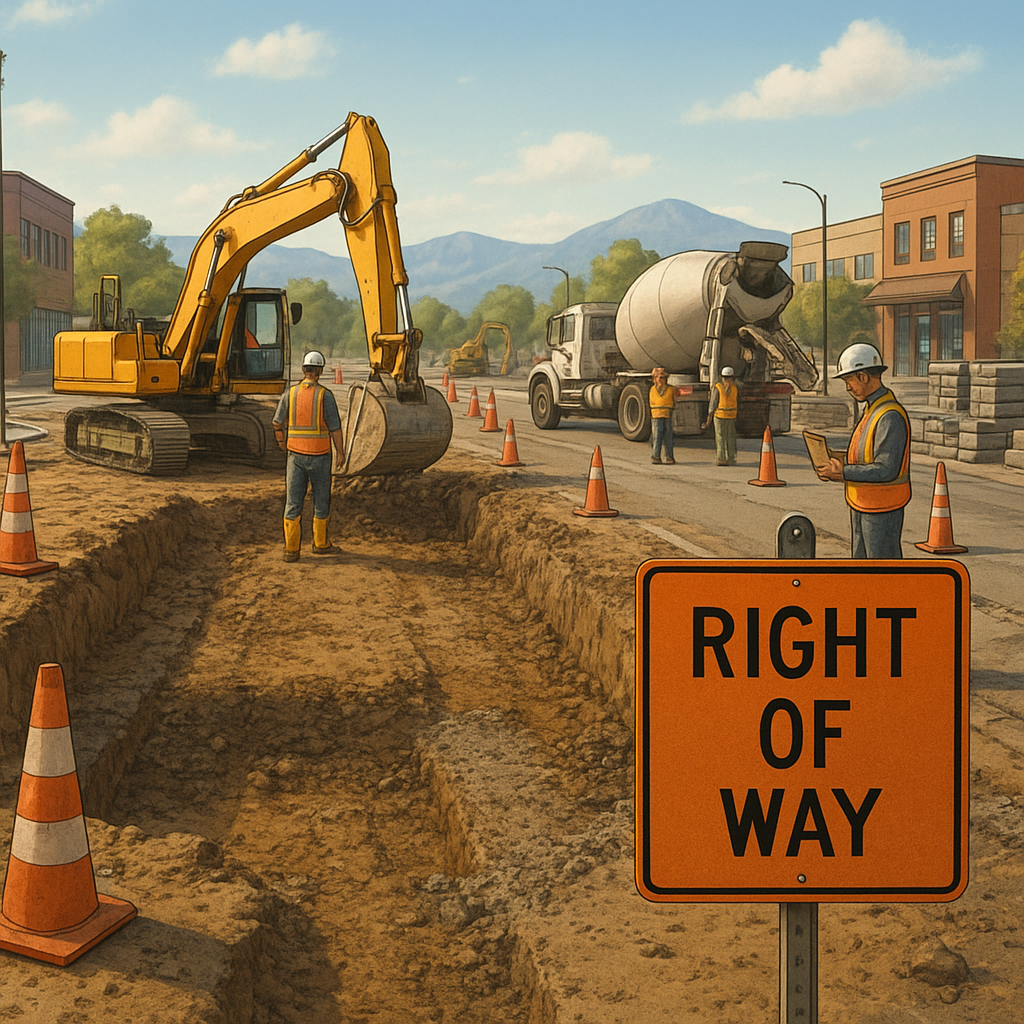
What Is a Right-of-Way in Littleton, Colorado?
If you live or work in Littleton, Colorado, you have probably walked on a public sidewalk, parked along a curb, or noticed a grassy strip between the street and a business sign. That space is often part of the public right-of-way. In simple terms, a right-of-way is land controlled by the city for public use, such as streets, sidewalks, curbs, gutters, parkways, and sometimes utility areas. It may sit right next to private property, but the city still has a say in how it is used and maintained.
When someone needs to dig into this area, pour concrete, repair a driveway approach, or pave a section of road, the City of Littleton CO requires proper permission. This is not meant to make life difficult. Think of it like borrowing a neighbor’s tool. You would ask first and promise to return it in good shape. The city simply wants the same kind of promise before you cut into public ground.
Why Street Excavation Needs Special Attention
Street excavation is more than just digging a hole. It can involve cutting asphalt, removing soil, working around water lines, gas lines, electrical conduits, and sewer pipes, and then putting everything back in a safe, stable way. If the work is done poorly, it can cause potholes, sinking pavement, drainage problems, or dangerous conditions for drivers and pedestrians.
Imagine you need to replace an old sewer lateral that runs from your home to the main line under the street. A contractor may need to saw cut the asphalt, dig a trench through the right-of-way, lay new pipe, backfill the trench, and patch the road. The City of Littleton wants to see a plan before that work starts. They want to know the street will be restored to the proper thickness and smoothness, not just covered with a quick patch that fails after the first freeze.
This is why a permit and often a right-of-way bond are required for street excavation. The bond is a financial guarantee that the work will be completed according to city standards. If the contractor walks away or does a poor job, the bond can help cover the cost of repairs.
Concrete and Paving Work in the Right-of-Way
Concrete and paving work are common in Littleton’s public right-of-way. A homeowner might need to replace a broken sidewalk panel. A business owner might need a new curb cut for a driveway. A utility contractor might need to remove and restore a section of pavement after installing underground lines. Each type of work has its own set of rules, but they all share one thing: the city cares about quality, safety, and long-term durability.
For concrete work, Littleton has specifications for things like thickness, strength, expansion joints, slope, and finish. For paving, the city may require proper compaction, asphalt depth, and final rolling to match the surrounding roadway. These details help prevent cracks, trip hazards, and water pooling. If you are paying for this work, you want it done right the first time. The city wants the same thing because they are responsible for the public space.
A permit helps ensure the right materials and methods are used. It also creates a record of the work, which can be helpful if questions come up later. Before any concrete is poured or asphalt is rolled, make sure the contractor has checked Littleton’s current requirements.
What Is a General Contractor Bond?
A general contractor bond is a type of surety bond that protects the city and the public. You can think of it like a security deposit. When you rent a car, the rental company keeps a deposit in case the car comes back damaged. With a contractor bond, the City of Littleton requires a bond so there is money available if a contractor fails to complete the work, violates permit rules, or leaves the right-of-way in poor condition.
This bond is not the same as standard insurance, even though contractors often need both. Insurance may cover accidents or property damage. A bond is more about performance and obligation. It helps guarantee that the contractor will follow the rules and restore the public space properly. If they do not, the city can make a claim against the bond.
For larger projects involving street excavation, concrete, or paving in Littleton, a general contractor bond may be required before a right-of-way permit is issued. The exact bond amount can vary based on the size and scope of the work. If you are hiring a contractor, ask whether they carry the appropriate bond for right-of-way work in Littleton. A reputable contractor will understand why this matters and should be able to show proof.
How to Get the Right Permit and Bond in Littleton
Every project is a little different, but the general process usually follows a similar path. First, determine whether your work will take place in the public right-of-way. If you are not sure, remember that a good rule of thumb is whether the work crosses your property line or touches a public sidewalk, curb, gutter, street, or parkway. If the answer is yes, you likely need a permit.
Next, contact the City of Littleton’s engineering or public works department. They can tell you what forms, plans, insurance certificates, and bond documents are required. For simple jobs like a sidewalk replacement, the process may be straightforward. For larger projects such as street excavation or full paving, you may need to submit detailed drawings, traffic control plans, and proof of bonding.
Once the permit is approved, the city may inspect the work at different stages. This can include checking the trench before backfill, inspecting concrete forms before pour, and reviewing the final surface after paving. These inspections are not there to slow you down. They help catch problems early, which can save money and prevent future repairs.
Questions to Ask Your Contractor
If you plan to hire someone for right-of-way work, asking the right questions can save you from headaches later. Consider these:
- Are you licensed to work in Littleton, Colorado?
- Do you carry a general contractor bond that covers right-of-way and street excavation?
- Have you handled concrete and paving work in the City of Littleton CO before?
- Will you obtain the required permits, or will that be my responsibility?
- Do you have a traffic control plan for public safety during the work?
- How will you restore the street, sidewalk, or curb after the job is complete?
These questions are not meant to be pushy. They are a normal part of hiring a professional. A contractor who is familiar with Littleton’s requirements will likely appreciate that you are taking the process seriously.
Common Mistakes to Avoid
One of the biggest mistakes people make is assuming they own the land all the way to the curb. In many cases, the city controls a portion of that frontage. Work done there without permission can lead to stop-work orders, fines, or the need to remove and redo the work.
Another mistake is starting excavation before calling for utility locates. Underground lines can be hit, causing dangerous situations and expensive repairs. In Colorado, calling 811 is a critical step before any digging. The city also wants to know that you have considered existing utilities when planning street excavation.
Skipping inspections is another common issue. You might be tempted to cover a trench quickly to get the street back open, but if the city has not inspected the backfill, you may have to open it up again. That costs time and money. Follow the inspection schedule and keep communication open.
Finally, some people hire the cheapest contractor without verifying bond and insurance coverage. If that contractor does poor work or disappears, you could be left paying for repairs. Paying a little more for a bonded, experienced contractor can be the smarter long-term choice.
Why These Rules Benefit Everyone
It can feel like extra paperwork when you just want a driveway fixed or a water line replaced. But these rules benefit the whole community. A properly restored street means fewer potholes and fewer car repairs. A smooth, well-built sidewalk means fewer trips and falls. A properly compacted trench means no sinking pavement after a few months. The right-of-way permit and bond process helps protect homeowners, business owners, drivers, pedestrians, and the city itself.
For contractors, understanding Littleton’s right-of-way, street excavation, concrete, paving, and general contractor bond requirements is a competitive advantage. It shows you respect the city’s standards and care about the quality of your work. For property owners, knowing the basics helps you make better decisions and hire the right people.
Final Thoughts
Right-of-way work in Littleton, Colorado does not have to be confusing. At its core, it is about communication, planning, and responsibility. Whether you are replacing a sidewalk, cutting into the street for a utility repair, pouring new concrete, or repaving an asphalt patch, the City of Littleton CO wants to make sure the work is safe, durable, and properly restored.
Before you start, confirm who owns the area, check permit needs, call for utility locates, and make sure your contractor is licensed, insured, and bonded. These steps may add a little time at the beginning, but they can save you from major problems later. When everyone follows the same playbook, the streets, sidewalks, and public spaces in Littleton stay safe and looking good for years to come.