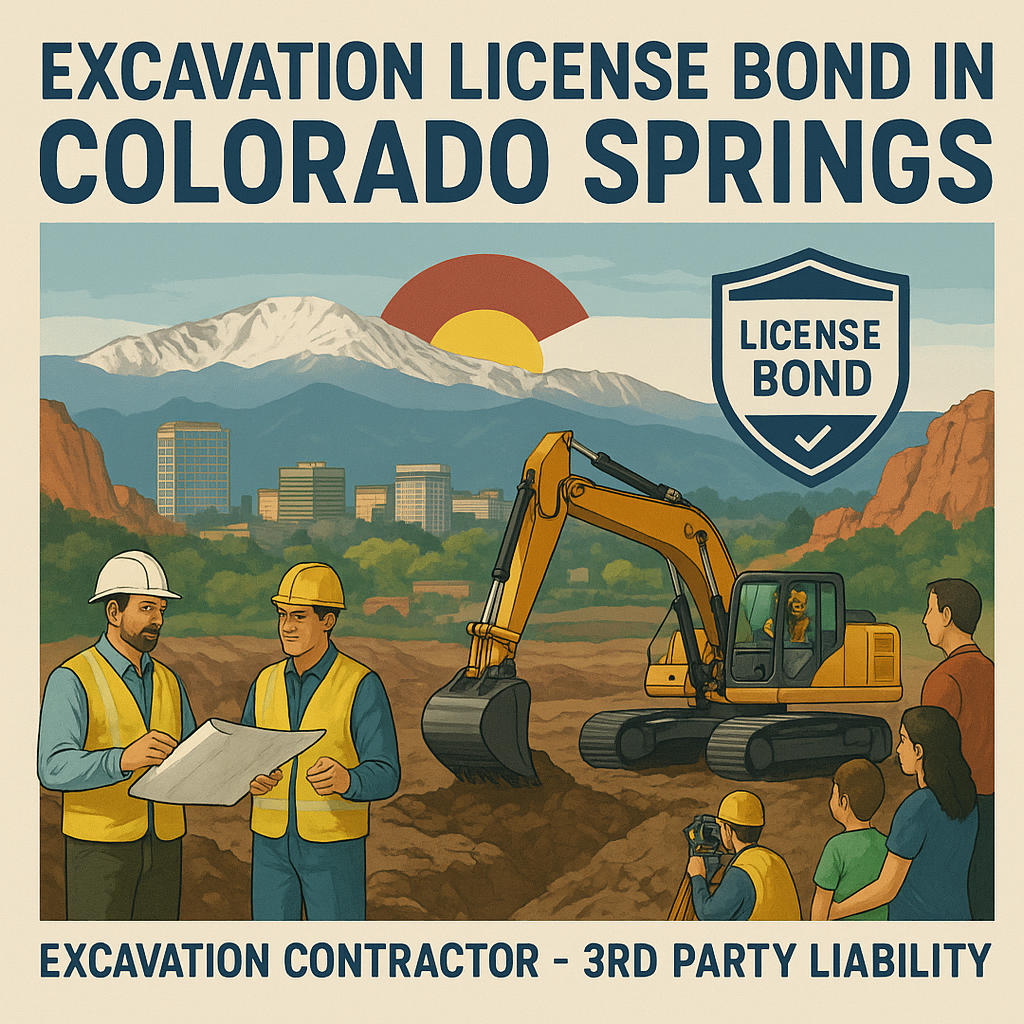
If you work as an excavation contractor in Colorado Springs, you have probably heard about an excavation license bond during your licensing process. It can seem confusing at first. Is it insurance? Is it a fee? Do you get the money back? The truth is, it is a special kind of financial protection that helps the city and the public feel more secure when you break ground on a project.
What Is an Excavation License Bond?
An excavation license bond is a type of surety bond required by the City of Colorado Springs for certain excavation contractors. It acts as a promise that you will follow local rules, codes, and safety guidelines while doing excavation work. If you fail to meet those obligations, the bond can be used to pay for damages or penalties.
This bond is not the same as insurance. It involves three parties:
- Principal: You, the excavation contractor.
- Obligee: The City of Colorado Springs, which requires the bond.
- Surety: The company that backs the bond and guarantees payment if a valid claim is made.
In simple terms, the city asks you to put a financial promise in place. That promise helps protect the public and public property while you dig, grade, trench, or move earth.
Why Colorado Springs Requires This Bond
Excavation work comes with real risks. A backhoe can easily hit an underground gas line, water main, fiber optic cable, or electrical conduit. A poorly planned trench can weaken a nearby road, sidewalk, or building foundation. Because of these risks, the City of Colorado Springs wants a safety net for third parties.
Here, third-party liability means damage or harm caused to someone other than you or your employees. That might include:
- A neighboring property owner whose driveway cracks because of your digging.
- A utility company whose underground lines are damaged.
- Pedestrians or drivers affected by unsafe excavation work.
- The city itself when public streets, curbs, or sidewalks are not restored properly.
The bond gives the city and affected parties a way to recover money if something goes wrong and you do not fix the problem on your own.
Who Needs an Excavation License Bond?
Most contractors who perform excavation work within Colorado Springs and need a local license or permit will likely need this bond. If your work involves digging, grading, trenching, site preparation, or land clearing, this requirement may apply to you.
This can include:
- General excavation contractors
- Grading and site prep specialists
- Trenching contractors
- Utility installation crews
- Demolition contractors who also move or remove earth
If you are unsure whether you need a bond, the best first step is to contact the City of Colorado Springs licensing office or speak with a surety bond professional. They can point you in the right direction based on your specific work.
How Does a Third-Party Liability Bond Work?
Think of an excavation license bond like a security deposit for the city and the public. You pay a small fee to put the bond in place, but you do not pay the full bond amount upfront. The surety company promises to cover claims up to the bond limit if you fail to meet your responsibilities.
Here is a practical example:
Imagine you are digging a trench for a new sewer line. During the work, your crew accidentally damages a city sidewalk. The city asks you to repair it, but weeks go by and the damage is still there. The city can then file a claim against your bond. If the claim is valid, the surety company may pay the city up to the bond amount. After that, you are responsible for paying the surety company back.
That last part is important. A bond is not a way to avoid paying for damage. It is a guarantee that money is available if you do not pay or fix the issue yourself.
Bond Amount and Cost
The required bond amount for a Colorado Springs excavation license can vary. The city sets the amount based on the type of work and the level of risk involved. Some contractor license bonds are smaller, while others must be higher because of the potential damage to underground infrastructure.
The good news is that you do not need to pay the full bond amount out of pocket. Instead, you pay a bond premium, which is typically a small percentage of the total bond amount. For many contractors, that premium might be between 1% and 5% of the bond amount, depending on credit history, experience, and business financials.
For example, if your required bond is $20,000 and your premium rate is 2%, you would pay about $400 to get the bond in place. This makes bonding more accessible than paying a large lump sum.
Excavation Bond vs. General Liability Insurance
One of the most common misconceptions is that a bond and insurance are the same. They are not.
Your general liability insurance protects your business if you are sued or if you cause injury or property damage. It usually covers your legal defense costs and can pay for damages. Insurance is there to protect you.
An excavation license bond protects the city and the public. It guarantees that you will follow the law and correct problems. If a claim is paid, the bond company will come back to you for repayment. So while it may feel like protection for others, it is ultimately a financial obligation for you.
You should carry both. A bond may be required for your license, but it does not replace the need for solid liability insurance coverage.
Common Reasons Claims Are Filed
Understanding why claims happen can help you avoid them. Some common reasons a claim might be filed against a Colorado Springs excavation bond include:
- Failing to call 811 before digging and hitting a marked utility line
- Damaging public roads, sidewalks, or curbs and not repairing them
- Working without the proper permits or inspections
- Violating local excavation codes or safety standards
- Leaving an open trench or excavation site unsafe for the public
- Causing damage to neighboring private property
Even a small mistake can lead to a claim if it is not handled quickly and professionally.
How to Get an Excavation License Bond in Colorado Springs
The process is usually straightforward. In most cases, you will follow these steps:
- Confirm the required bond amount: Ask the City of Colorado Springs what bond amount your license or permit requires.
- Gather your business information: This may include your business name, license number, contact details, and sometimes financial information.
- Apply with a surety bond provider: You can work with an agency that specializes in contractor license bonds.
- Pay the premium: Once approved, you pay the small premium and the bond is issued.
- File the bond with the city: Submit proof of your bond as part of your licensing or permit application.
Many bond providers can issue bonds quickly, sometimes within the same day for straightforward applications.
Tips to Avoid Bond Claims
No contractor wants to deal with a bond claim. It can cost money, hurt your reputation, and make it harder to get bonded in the future. Here are some practical ways to reduce your risk:
- Call 811 before every dig: This is non-negotiable. Utility locating is a simple step that prevents major damage.
- Get the right permits: Do not start work until you know the city requirements are met.
- Document the job site: Take photos before and after excavation to record the condition of nearby property.
- Use proper safety measures: Shoring, barricades, and clear signage protect both workers and the public.
- Fix issues quickly: If you do cause damage, communicate with the city or property owner and repair it right away.
These habits not only protect your bond but also make your business more professional and trustworthy.
Final Thoughts
An excavation license bond in Colorado Springs is an important part of operating legally and responsibly. It protects the city, residents, utility companies, and property owners from the hidden dangers that can come with digging into the ground. For contractors, it is both a requirement and a signal that you take your work seriously.
If you are applying for an excavation license or planning a project in Colorado Springs, take time to understand the bond requirement. Work with the city and a trusted surety bond expert to get the right bond at the right price. Then focus on doing what you do best: safe, professional excavation work that keeps your clients and your community protected.