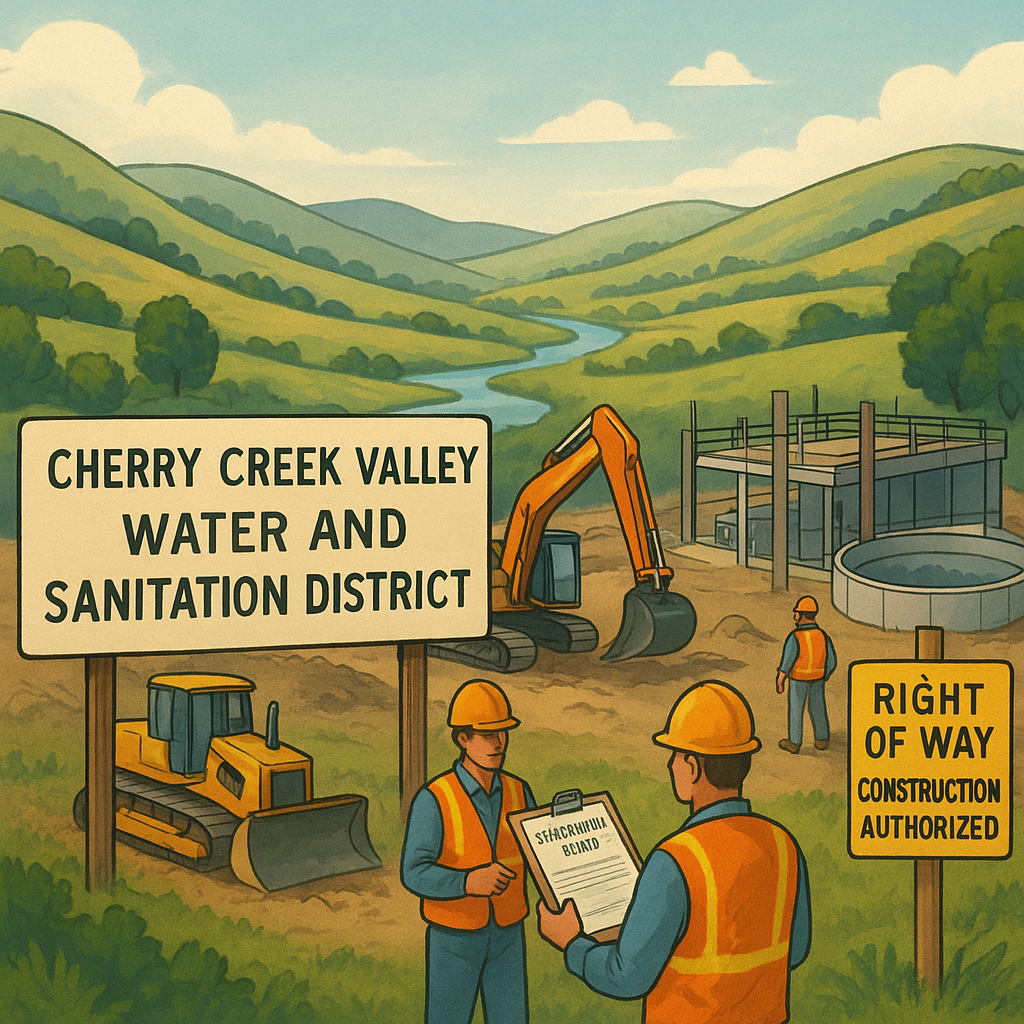
If you’re planning a construction project that touches public streets, sidewalks, or utility easements in Cherry Creek Valley, Colorado, you’ve probably come across the terms construction license bond and performance bond. These two instruments are not just paperwork—they are financial promises designed to protect the community, the district, and even you as a property owner.
The Cherry Creek Valley Water and Sanitation District serves a growing area with essential water and sewer services. Because so much of that infrastructure runs beneath public right-of-way, the district has clear rules for contractors. Those rules often include bonding requirements that keep projects safe, accountable, and properly completed.
What Is a Construction License Bond?
A construction license bond is a three-party agreement between a contractor, the Cherry Creek Valley Water and Sanitation District, and a surety bond company. The contractor promises to follow all applicable rules, codes, and district requirements while working in the right-of-way. The surety company backs that promise financially.
Think of it as a security deposit for good behavior. If a contractor performs work without proper permits, damages public property, or violates safety standards, the district can file a claim against the bond. The surety may then pay to correct the problem, up to the bond amount.
This bond is not the same as contractor insurance. It protects the public and the district, not the contractor. If a claim is paid, the contractor is generally responsible for repaying the surety company.
Why the District Requires a License Bond
Right-of-way work is sensitive. Contractors often dig near water lines, sewer mains, roadways, and sidewalks. A small mistake can disrupt service for an entire neighborhood. The bond gives the district a financial tool to address violations without burdening local ratepayers.
What Is a Performance Bond?
A performance bond is a guarantee that a contractor will complete a project according to the approved plans, specifications, and timeline. If the contractor abandons the job, does substandard work, or fails to restore the site, the bond can be used to finish the job or cover the cost of repairs.
Imagine hiring someone to build a fence in your yard. You pay a deposit, but the contractor disappears halfway through. A performance bond would provide money to hire someone else to finish the fence. For public infrastructure, this protection is even more important because unfinished roadwork or open trenches can create safety hazards.
How Performance Bonds Protect Public Projects
When a contractor works in the right-of-way under the jurisdiction of Cherry Creek Valley Water and Sanitation District, they may cut into pavement, remove sidewalks, or disturb landscaping. A performance bond ensures that after the underground utility work is done, the surface is restored properly. That means no lingering potholes, unsafe walkways, or unfinished patches on public streets.
Why Both Bonds Matter in Cherry Creek Valley
The Cherry Creek Valley Water and Sanitation District uses both bonds to create layers of protection. The construction license bond focuses on following rules during the work. The performance bond focuses on completing the work correctly. Together, they hold contractors accountable from start to finish.
These requirements also help filter out underqualified or unreliable contractors. Before a surety company issues a bond, it reviews the contractor’s financial stability, experience, and track record. If a contractor cannot get bonded, that is often a warning sign.
Protecting Shared Public Spaces
Public right-of-way includes streets, curbs, gutters, sidewalks, parkways, and utility easements. These spaces are shared by everyone. Construction work in these areas can affect traffic, drainage, pedestrian safety, and access to local businesses. Bonds help ensure that the contractor restores these areas and addresses any damage before leaving the site.
Common Projects That Require These Bonds
You might wonder when these bonds are actually needed. In Cherry Creek Valley, they are commonly required for projects such as:
- Installing new water or sewer service lines under streets or sidewalks.
- Repairing or replacing existing water and sewer mains that cross public roads.
- Restoring pavement, curbs, gutters, or landscaping after underground utility work.
- Excavating within a public easement inside the district’s service area.
- Connecting private development infrastructure to the district’s public utility system.
Each of these projects carries risk. The bonds provide a financial cushion if something goes wrong.
How Contractors Obtain These Bonds
If you are a contractor preparing to work in the Cherry Creek Valley area, the bonding process may feel unfamiliar at first. Fortunately, it follows a straightforward path.
First, contact a licensed surety bond agency that is familiar with Colorado utility district requirements. You will need to share basic information about your business, including your license, financial statements, and project history. The surety company will evaluate your credit and experience. Once approved, you pay a premium, which is usually a small percentage of the total bond amount.
After the bond is issued, you submit proof to the Cherry Creek Valley Water and Sanitation District before beginning work on the right-of-way. The district will keep the bond on file to protect the project and the public.
What Affects Bond Costs?
Bond premiums can vary. Contractors with strong credit and a solid record often pay lower rates. The bond amount required by the district also matters. A small repair project may require a smaller bond, while a large utility installation may require a higher amount. Your bond agency can help you understand the exact cost for your project.
What Property Owners Should Know
If you own property in Cherry Creek Valley and need work that crosses into the public right-of-way, your contractor may need to secure these bonds. This is a good thing for you. The bond requirements help ensure the job is done properly and that any damage to public infrastructure is addressed.
Before signing a contract, ask your contractor whether they are familiar with the district’s bonding and permitting requirements. A reputable contractor will know the rules and will include bonding costs in their proposal. If a contractor wants to skip the bond or encourages you to ignore district requirements, consider that a red flag.
Claims: What Happens When Something Goes Wrong
Let’s say a contractor digs into a street to replace a water line but leaves the pavement uneven. The district may inspect the site and determine that the restoration is not acceptable. If the contractor does not fix the problem, the district can file a claim against the performance bond.
The surety company will investigate the claim. If the claim is valid, the surety may hire another contractor to make the repairs or pay the district for the cost. The original contractor is then expected to reimburse the surety. This system keeps public funds from being used to fix private contractor mistakes.
Frequently Asked Questions
Is a construction license bond the same as insurance?
No. Insurance generally protects the contractor from losses. A bond protects the district and the public. If a bond claim is paid, the contractor must typically repay the surety company.
Who pays for the bond?
The contractor pays the bond premium. It is a normal cost of doing business and is often included in the project bid or contract price.
Can the bond requirement be waived?
In most cases, no. Right-of-way work in the district requires bonding to protect public infrastructure and ensure project completion. Waivers are rare and typically not available for work that disturbs public streets or utility easements.
What happens if a contractor cannot get bonded?
If a contractor cannot secure the required bond, they cannot legally perform the work in the district’s right-of-way. This is a sign that the contractor may have financial or performance concerns.
How long does the bond stay in place?
The bond remains active for the required bond period, which often covers the project duration plus a maintenance or warranty period. The district will specify the exact term based on the project type.
Final Thoughts
Construction bond requirements may seem like extra paperwork, but they serve an important purpose. In Cherry Creek Valley, they help protect public streets, sidewalks, water lines, and sewer systems from unfinished or poorly done work. They also give property owners and residents peace of mind that projects will be completed and restored properly.
Whether you are a contractor preparing to work in the right-of-way or a property owner planning a construction project near public utilities, understanding construction license bonds and performance bonds is a smart first step. When the rules are clear and the financial promises are in place, everyone benefits.